
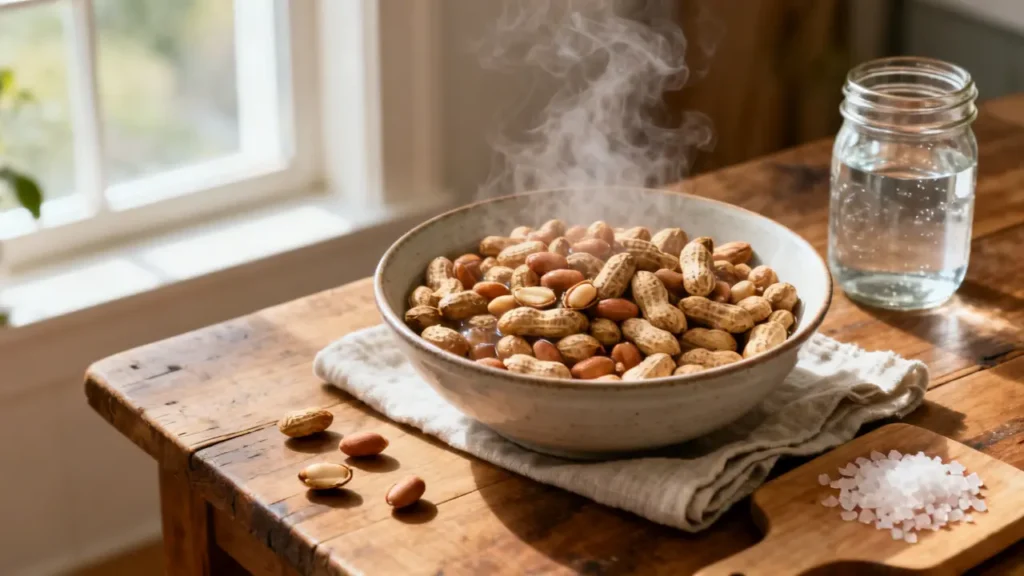

Quick Answer: How to Keep Boiled Peanuts
Short answer: cool them within two hours, store covered in their cooking liquid in an airtight container and refrigerate at 40°F (4°C) or below for best quality—expect 7–10 days. For long term, portion and freeze with some brine (best within 3 months, safe up to 6 months). For shelf stability only use tested pressure-canning methods from USDA/Ball guidance.
We’ll explain the why behind those numbers, step-by-step cooling and packing tips, freezer and vacuum‑seal tricks, reheating methods, and clear spoilage signs. If you want a quick recipe to make or re-season them, see our tutorial on how to make boiled peanuts.
Safe Storage Temperatures & Why They Matter
Keep boiled peanuts cold because they’re a moist, low-acid food that supports bacterial growth if left in the “danger zone.” Refrigerators should be at 40°F (4°C) or below; freezers at 0°F (-18°C) or below. Those temperatures don’t sterilize food, they simply slow microbial activity enough to preserve quality and safety.
Why the numbers? Microbes multiply fastest between 40–140°F (4–60°C); chilling below 40°F buys you time. Freezing at 0°F halts microbial growth and preserves texture for months, but thawing and reheating are where quality (and risk) return—so package properly and reheat thoroughly.
Immediate Short-Term Storage (Same Day)
If you’re serving later the same day, boiled peanuts can sit at cool room temperature for a short window—aim for under 2 hours total in the danger zone; reduce to 1 hour when it’s hot (above 90°F / 32°C). For parties, keep them on a warm burner set low or in a shallow covered pan so the center stays hot.
When you stop serving, cool them quickly: remove the pot from heat, skim excess foam, and either transfer to smaller shallow containers or set the pot in an ice bath to bring temperature down faster. Leaving a huge pot full of hot peanuts in a warm kitchen invites condensation and bacterial growth—cooling fast is the safest move.
Room Temperature — When It’s OK
It’s fine to leave boiled peanuts out for a few hours if they stay warm (above 140°F) or the room is cool; otherwise limit to under 2 hours. In humid or hot climates keep the window shorter—Daniel learned at a summer tailgate that two hours in direct sun is too long.
Refrigeration (Best for 7–10 Days)
For regular storage, refrigerate. Cool peanuts to near room temperature within two hours, then transfer to airtight containers and refrigerate at 40°F (4°C) or below. Keeping them submerged in their cooking liquid or brine prevents drying and flavor loss—make sure the brine covers the peanuts completely.
Step-by-step: skim foam, cool the pot or chill in an ice bath, portion into shallow containers with brine, seal tightly, and label with date. Expect best flavor and texture for 7–10 days; vacuum sealing can stretch that to 2–4 weeks for quality, though the USDA‑recommended conservative window for everyday fridge storage is a week or so.
Best containers and packaging tips
Use glass or food‑grade plastic containers with tight lids, or heavy‑duty resealable bags. Leave minimal headspace so air can’t dry them out; if using bags, press out extra air or use a handheld vacuum sealer. Label each container with the date and use within the recommended window.
Personal note: I learned the hard way that tucking a still‑warm pot straight into the fridge makes the pot sweat and raises fridge temperature; always cool first to avoid making other food warmer.
Freezing (Best Long-Term: 3–6 Months)
Freezing is the best option if you want to keep boiled peanuts beyond a few weeks. Cool completely, portion into freezer-safe bags or containers with a little cooking liquid or brine (enough to cover), remove excess air, flatten bags for quick freezing, and store at 0°F (-18°C) or below. Best quality within 3 months, safe up to about 6 months.
Portioning matters: freeze in serving-size portions so you only thaw what you need. For step‑by‑step freezing tips see our deeper guide on how to freeze boiled peanuts, which shows the exact bagging and brine ratios that help avoid sogginess on thaw.
Thawing & reheating from frozen
Thaw overnight in the fridge, or reheat from frozen by simmering in a pot of salted water for 10–20 minutes until heated through. Microwaving works for small portions (see reheating section), but simmering in brine restores texture best.
Vacuum Sealing & Sous‑Vide Options
Vacuum sealing boiled peanuts with a bit of brine reduces oxidation and freezer burn, extending quality in the fridge and freezer. If you have a vacuum sealer, pack in meal‑size portions with just enough liquid to cover and remove air; refrigerated vacuum‑sealed peanuts hold quality noticeably longer—think weeks rather than days.
Sous‑vide is a niche approach: bag raw peanuts with seasoning and cook sous‑vide at recommended temperatures, then cool and store sealed. That method requires precise temperatures and rapid cooling; we only recommend it if you follow tested recipes or commercial procedures.
Canning & Commercial‑Style Shelf‑Stable Options
Do not attempt to make shelf‑stable boiled peanuts with a water bath canner. Peanuts are low‑acid; pressure canning is required to reach temperatures that destroy dangerous spores. Follow USDA or Ball tested recipes and processing tables—don’t improvise processing times or pressures at home.
If you want commercially shelf‑stable boiled peanuts, buy sealed cans from reputable brands or follow a tested pressure‑canning recipe and consult your county extension, USDA, or Ball canning guides first. For more on home canning see our internal resource on how to can boiled peanuts and the USDA canning guidance.
Why you must use pressure canning
Low‑acid foods (pH > 4.6) can support Clostridium botulinum spores that survive boiling water temperatures; only a pressure canner reaches the higher temperatures needed for safe home canning. Use tested instructions—this is a food‑safety, not a flavor choice.
Reheating Boiled Peanuts (Best Methods & Times)
Stovetop reheating is our go‑to: simmer peanuts in a pot with a splash of cooking liquid or salted water for 5–15 minutes depending on quantity and starting temperature. That gentle simmer restores texture and warms them evenly without breaking skins.
Microwave small portions 1–2 minutes, stir, then continue in 30‑second bursts until hot; keep a little brine or water in the bowl to prevent drying. For oven reheating, place in a covered dish at 350°F (175°C) for 15–20 minutes.
Tips to restore texture and flavor
If peanuts taste flat after storage, re‑simmer with a teaspoon of kosher salt per cup of water and a pinch of cayenne or Old Bay to revive flavor. Adding a little acid (a squeeze of lemon) at the end brightens the taste if they’ve dulled in the fridge.
Troubleshooting & Common Mistakes
Know the spoilage cues: discard peanuts that smell sour, fermenty, or yeast‑like, show visible mold, or have a slimy coating. Texture changes—mushy, grainy, or very off flavors—are signs they’re past eating; when in doubt, throw them out.
Common mistakes: putting hot peanuts straight into the fridge (raises fridge temp and creates condensation), not storing them in brine (they dry out), and trying water‑bath canning (unsafe for low‑acid foods). Avoid those and you’ll keep quality and safety aligned.
Revival for too‑soft or bland peanuts
If peanuts are too soft after storage, re‑simmer briefly in salted water for 5–10 minutes to firm them slightly. For bland peanuts, simmer with a tablespoon of your original spice mix or a pinch of cayenne to bring the flavor back.
Quick Reference: Storage Chart
At a glance: Room temp: under 2 hours (1 hour if >90°F / 32°C). Fridge: 40°F (4°C) — best 7–10 days. Freezer: 0°F (-18°C) — best 3 months, safe to ~6 months. Canning: only with pressure canner and tested recipes.
- Short term: cool fast, refrigerate within 2 hours.
- Fridge: keep covered in brine; eat within 7–10 days.
- Freeze: portion, include brine, remove air; best 3 months.
Frequently Asked Questions
Conclusion & Best Practices Checklist
Keeping boiled peanuts at peak means cooling fast, storing cold, and using brine as your friend. Follow the fridge and freezer windows above, avoid ad‑hoc canning, and reheat gently to revive texture. Little steps—labeling, portioning, and removing air—make a big difference.
- Cool to room temp within 2 hours, faster in summer with an ice bath.
- Store in airtight containers with brine; refrigerate at 40°F (4°C) or below.
- Eat refrigerated peanuts within 7–10 days.
- Freeze portioned with brine; remove air—best within 3 months.
- Only pressure can to make shelf‑stable jars—use tested USDA/Ball recipes.
- Reheat by simmering 5–20 minutes; add salt or spices to revive flavor.
If you want printable steps, a freezer‑label template, or our favorite revival spice mix (Old Bay + cayenne), say the word — we’ll drop the quick printable here and link to our related guides on freezing, reheating, and canning.


