
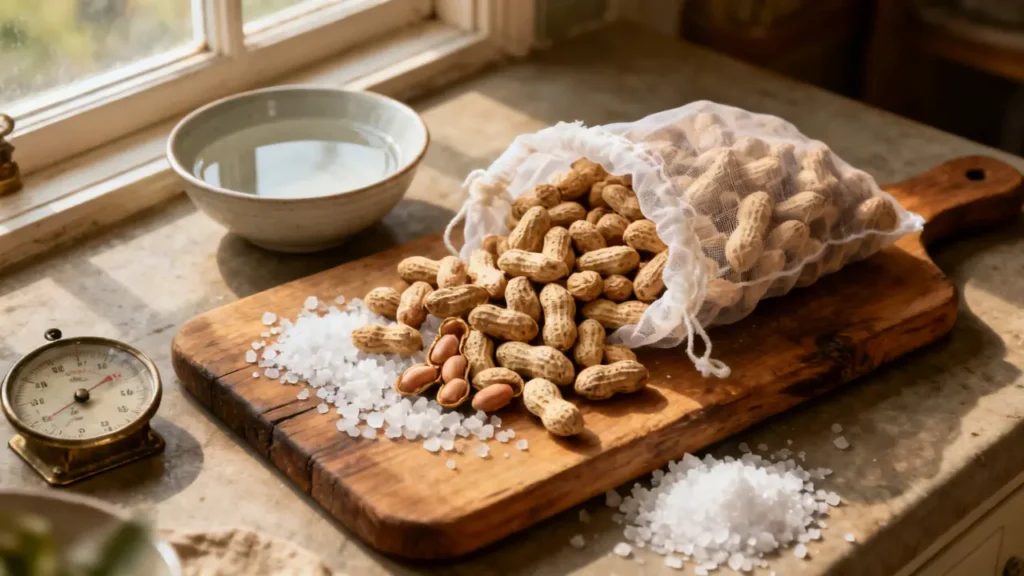

Wondering how to freeze boiled peanuts so they keep their texture, flavor and remain safe? Short answer: cool them quickly in an ice bath within the USDA 2-hour window, portion and flash-freeze on a sheet pan, then pack airtight, label and freeze. For best quality eat within 6 months (vacuum-sealed up to 12 months).
Quick answer — can you freeze boiled peanuts?
Yes — you can freeze boiled peanuts and keep them tasty and safe if you follow a few key steps. Cool to below 40°F (4°C) within 2 hours, portion while cool, flash-freeze loose peanuts, then seal in vacuum bags or heavy-duty freezer bags to prevent freezer burn. Remember that frozen foods kept at 0°F (-18°C) are safe indefinitely, but quality is best for about 6 months (vacuum-sealed up to 12 months).
Freezing is a great way to stretch the season when green peanuts are available — it beats leaving a big bowl to go stale. If you want a full how-to for boiling first, our guide on how to make boiled peanuts and our pressure-cooker method are handy references before you freeze.
Why freeze boiled peanuts?
Freezing boiled peanuts captures the fresh-season flavor and convenience so you can enjoy them year-round without daily planning. If you grow or buy green peanuts in bulk, freezing lets you portion for snacks, parties, or recipes and prevents waste. Freezing preserves texture and flavor better than refrigerating for more than a few days, provided you remove air and control moisture to avoid freezer burn.
We also like freezing because it saves time later — reheating a 1–2 cup bag is much faster than boiling a whole pot again. For storage and recipe ideas, check our tips on how to preserve boiled peanuts.
Safety first — cooling & handling after boiling
Food safety matters: you must cool boiled peanuts quickly because cooked peanuts are low-acid and can sit in the bacterial danger zone if left warm. Follow the USDA 2-hour rule — get the peanuts from hot to below 40°F (4°C) within two hours to limit bacterial growth. Cooling fast preserves safety and keeps texture intact.
Why rapid cooling matters
When peanuts sit between 40–140°F (4–60°C) for hours, bacteria can multiply. Rapid cooling reduces that window and makes freezing safe. This isn’t theoretical: the USDA recommends chilled storage for cooked low-acid foods, and we follow that guidance every time we freeze a batch.
How to cool peanuts fast (ice-bath method)
Drain the peanuts from the cooking liquid and transfer them to a colander. Submerge the colander and the drained pot in a sink or cooler full of ice and cold water, stir occasionally and let them sit until cool to the touch — typically 20–30 minutes. If you prefer, ladle peanuts into shallow pans to speed cooling, stirring once or twice.
One pro tip we always use: cool and portion on the counter only long enough to get them comfortable to handle, then move to the fridge for final cooling if you need an extra 30–45 minutes before packaging. Sarah learned the hard way that skipping the ice-bath left peanuts at unsafe temperatures for too long — now we never skip it.
What to freeze — in-shell vs shelled, plus portioning
Choose in-shell for nostalgic snacking and slower reheating; choose shelled for space savings and faster reheating in soups or dips. In-shell peanuts take up more room and take a little longer to reheat, while shelled peanuts are easy to measure and use straight from the freezer.
Portioning matters: freeze in serving-sized containers so you only thaw what you need. We recommend freezing individual snack portions of 1–2 cups or family portions of 4–8 cups; for recipes, 1–2 cup batches are easiest to reheat. Portioning prevents repeated thawing and refreezing, which degrades texture.
Salt-adjustment tip before freezing
Salt concentrates subtly after freezing and reheating, so plan to under-salt at the boil by about 10–15% if you intend to freeze. If a batch comes out too salty later, you can rinse briefly and re-simmer in unsalted water to mellow it. Daniel swears by tasting a cooled sample before sealing — it’s saved us from oversalted batches more than once.
Best packaging methods (step-by-step)
Packing right prevents freezer burn and off-flavors. The top choices are vacuum sealing (best), heavy-duty freezer bags (budget-friendly), or rigid freezer-safe containers (useful for liquids or brined peanuts). Always cool fully before sealing and leave minimal headspace.
Vacuum sealing (recommended)
Vacuum sealing removes air that causes freezer burn and can extend quality from about 6 months to up to 12 months. Cool peanuts completely, portion into vacuum bags, then seal according to your machine’s instructions. For slightly warm peanuts, let them chill in the fridge first to avoid steam trapped under the seal.
Freezer bags with air removal (budget option)
For a budget method, flash-freeze loose or shelled peanuts on a parchment-lined sheet pan for 1–2 hours until firm, then transfer to heavy-duty freezer bags. Press out as much air as possible (roll down, use a straw to suck air, or use a hand vacuum), double-bag if needed, and label with date and salt level. Flash-freezing keeps pieces separate and makes bags easier to portion.
Rigid containers & flash-freezing
Use rigid freezer-safe containers when you need sturdiness (shipping, long-term stacking, or if peanuts are in liquid). Leave 1/2–1 inch (1–2 cm) headspace for expansion and make sure peanuts are cool before sealing. Always label with date, variety and salt level — that small habit saves confusion months later.
We also recommend adding a small note on the bag like “boiled 2 hrs, light salt” so you remember how to reheat. If you want more on boiling techniques, our step-by-step guide on how to make boiled peanuts and the pressure-cooker approach at pressure-cooker boiled peanuts are helpful before packing.
How long can you freeze boiled peanuts?
Frozen boiled peanuts are safe as long as they stay at 0°F (-18°C), but quality declines over time. For best texture and flavor plan on 6 months for standard freezer bags or containers and up to 12 months when vacuum-sealed. After those windows you may still eat them safely, but expect dryer texture and diminished flavor.
Signs a pack is past its prime include obvious freezer burn (white, dry spots), off-odors, or an unpleasantly mealy texture. If that happens, use the peanuts in cooked dishes (stews, purees, or blended dips) where texture is less critical.
Thawing & reheating — fast and slow methods
The preferred thaw is overnight in the fridge for best texture, but you can reheat from frozen if you’re short on time. Reheating method affects texture: gentle simmering keeps peanuts plump; microwaving is fastest but can dry them if you overdo it. Pick the method based on whether you froze shelled or in-shell and how you’ll use them.
Thawing in the fridge (preferred)
Move frozen portions to the refrigerator and let thaw overnight (8–12 hours). This preserves the best texture and reduces moisture loss during reheating. Once thawed, reheat by simmering briefly or use in recipes straight from the fridge.
Reheating from frozen — stovetop simmer
For frozen portions add peanuts to a pot with just enough water to cover and bring to a simmer; cook 10–20 minutes from frozen until heated through and tender. If they were slightly undercooked before freezing you’ll need less time; if they were very soft, heat gently to avoid turning them mushy. This method restores moisture best.
Microwave & Instant Pot
Microwave 1–2 cup portions on medium power for 2–4 minutes, covered with a damp paper towel and stirring halfway. For the Instant Pot/pressure-cooker, add 1 cup water per 2 cups peanuts, steam or pressure for 5–10 minutes with a natural or quick release depending on batch size. Both are fast and convenient for small portions.
Oven or air-fryer methods are less ideal because they dry peanuts; use them only when making a crunchy snack rather than restoring boiled texture. If reheating in liquid, taste before adding extra salt — freezing and reheating can intensify salinity.
Troubleshooting & best uses
Mushy peanuts usually mean they were overcooked before freezing; the fix is to use them in blended applications like hummus, soups or stews. Too-salty results from concentrating flavors — briefly rinse and re-simmer in unsalted water to mellow them. Freezer-burned peanuts are safe but dry; use in recipes where texture isn’t critical.
Best uses for frozen boiled peanuts include snacking after reheating, folding into stews, blending into boiled-peanut spread, or tossing chopped peanuts into salads. They’re also great in Southern-style dishes and dips when you want that boiled-peanut flavor without a long boil day.
I remember one batch I (Sarah) left simmering just a little too long because the kids wanted snacks — the peanuts were soft to the point of near-mash after freezing. Ever since, I undercook by about 5–10 minutes when I know we’ll freeze them, and that extra bite makes all the difference after reheating.
Quick checklist — freeze boiled peanuts in 6 steps
Here’s a compact checklist to save time: cool, portion, flash-freeze, pack, label, freeze. Do these in order and you’ll avoid the most common mistakes that cause freezer burn or off-flavors.
- Drain and cool peanuts in an ice bath until cool to the touch (20–30 minutes).
- Portion into serving or recipe sizes (1–2 cups for snacks, 4–8 cups for family batches).
- Flash-freeze loose/shelled peanuts on a sheet pan for 1–2 hours until firm.
- Transfer to vacuum bags or heavy-duty freezer bags; remove air and seal.
- Label with date, variety and salt level.
- Freeze flat for best space use; enjoy within 6 months (vacuum-sealed to 12 months).


