
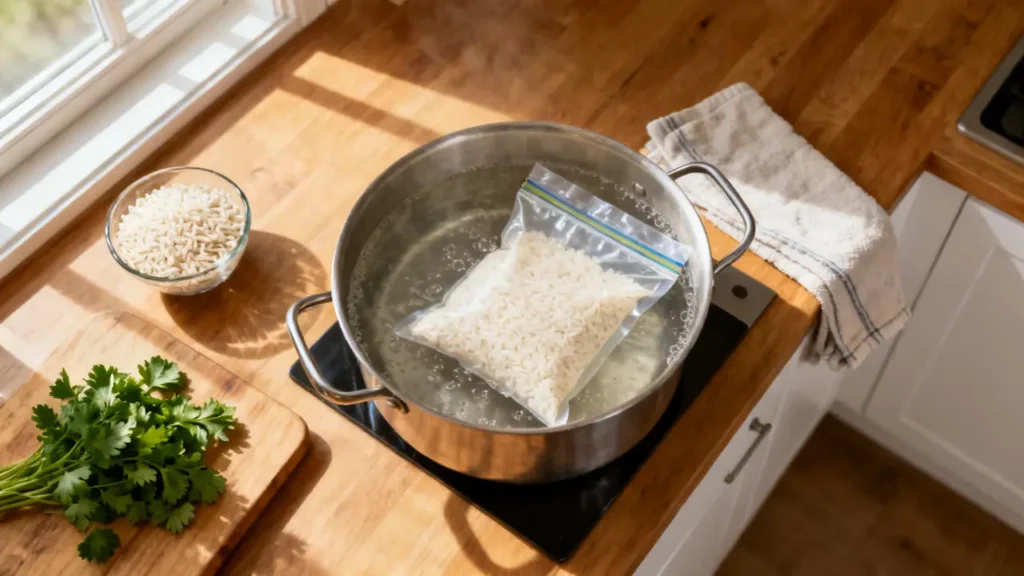

Boil-in-bag rice is the easiest, least fussy way to get reliably cooked rice at home. In this guide we’ll show exactly how to make boil in bag rice on the stove or in the microwave, with precise times, water ratios, seasoning ideas, and quick troubleshooting.
why boil-in-bag rice works
Boil-in-bag rice works because the rice is pre-measured and often pre-steamed, and the sealed bag keeps the grains separate while they absorb heat evenly; that means consistent results with very little active work. You simply submerge the bag in boiling water, simmer for the recommended time, and remove—no stirring, no watching for boil-overs, and minimal risk of sticking.
The bag is usually made from food-safe polypropylene or a heat-stable film designed to stay intact at boiling temperatures; it keeps steam contact around the rice so the kernels rehydrate uniformly. Because you’re not cooking rice in a fixed water-to-rice ratio inside the bag, manufacturers design timing so the rice finishes properly in plenty of boiling water rather than by absorption alone.
basic method: stove and microwave
The simplest way to make boil in bag rice is to drop the sealed bag into a pot of rapidly boiling water and simmer it—usually white rice 10–12 minutes and brown rice 18–20 minutes. For microwave-ready bags, follow the package, but most single-serving bags take about 90–120 seconds on high; always check your brand’s instructions first.
Here’s the step-by-step stove method we use most nights—this is the safest, most reliable approach for household stovetops. If you prefer the microwave, use a microwave-safe bowl with a little extra water and vent the bag if instructed by the manufacturer.
- Fill a pot so there is at least 2–3 inches (5–7 cm) of water above the bag; bring to a rolling boil.
- Drop the sealed bag into the boiling water and reduce to a gentle simmer so the water still bubbles but isn’t violently rolling.
- Cook for 10–12 minutes for white rice or 18–20 minutes for brown rice; adjust 1–2 minutes if your brand specifies otherwise.
- Use tongs to remove the bag, snip it open carefully, and pour rice onto a forked spoon or into a bowl; fluff with a fork and finish with butter or oil if desired.
Note: many brands publish exact times on the pouch—if yours differs by a minute or two, follow the package. For a one-bag microwave method, place the sealed bag in a microwave-safe bowl with a tablespoon of water to keep steam, and heat per package directions.
timing, water, and doneness
Timing depends on rice type: white/medium rice 10–12 minutes, parboiled 12–14 minutes, and brown 18–20 minutes is a safe rule-of-thumb for most boil-in-bag products. You don’t need an exact water-to-rice ratio because the bag cooks in excess water; instead, focus on having ample, gently boiling water so the bag is fully submerged and the temperature stays near boiling.
Look for visual cues: grains should be plump, separated, and uniformly translucent (for white rice) or slightly chewy but tender (for brown). If grains still look chalky in the center, let the bag sit in hot (not vigorously boiling) water for another 2–4 minutes or follow the package for a short soak.
Quick checklist: use plenty of water, simmer rather than a violent boil (to prevent bag rupture), and trust the times printed on the package as your primary guide. If you want a single-reference page on similar rice methods, see our tips on how to boil rice.
adding flavor and serving ideas
You can’t usually add dry seasonings into a sealed bag before cooking, so flavor both the cooking water and the rice after you open the bag: add a teaspoon of bouillon or a tablespoon of butter/oil to the drained rice, or finish with chopped herbs and lemon zest. Cooking the bag in lightly salted, aromatic water (bay leaf, garlic clove, or a half onion) infuses subtle flavor that carries through after you open the bag.
For quick weeknight meals we like stirring in a knob of butter and a pinch of salt, or tossing the rice with soy sauce, green onions, and toasted sesame oil for an instant side. If you want a more hands-on method, you can transfer the drained rice to a pan and sauté briefly with garlic and vegetables for extra texture and flavor—see our technique on how to cook boil-in-bag rice with a quick seasoning finish.
Pro tip: stir in a teaspoon of oil or butter immediately after opening to keep grains glossy and prevent clumping; this is the easiest way to make plain bagged rice taste homemade.
common problems and troubleshooting
If your boil in bag rice is too hard, it was likely undercooked or the water wasn’t hot enough—return the sealed bag to simmering water for another 3–5 minutes and then test. If it’s too soft or mushy, you’ve probably overcooked it or let it sit in hot water too long; drain quickly, spread out on a tray to cool, and use it in fried rice where texture matters less.
A very common mistake is boiling the pot too hard so the bag smashes against the sides and tears; I learned this the hard way when I left a bag in a furious rolling boil and the seam split—what a mess. Now I always lower the heat to a gentle simmer and set a timer; that small change kept our weeknight rice reliable and bag-intact.
Other quick fixes: if the bag splits, transfer rice into a fine-mesh strainer, rinse with hot water to remove excess starch, and finish with butter or a quick pan toss. For repeat issues, try a different brand—some bags are sturdier than others—or microwave single-serving pouches where appropriate.
Common mistake: skimping on water or using a tiny pot. Use a pot with room so the bag can move freely; that prevents stuck bags and uneven heat.
quick-reference summary
- White rice: 10–12 minutes simmer.
- Brown rice: 18–20 minutes simmer.
- Water: at least 2–3 inches (5–7 cm) above the bag; plenty of water beats exact ratios.
- Microwave single bag: ~90–120 seconds (follow package).
These simple rules make boil-in-bag rice a dependable shortcut: give it room to cook, keep the simmer gentle, and finish with a fat or acid to lift the flavor. If you want more rice-cooking methods, check our related guides on how to boil rice or cooking rice in other appliances like the pressure cooker.


