
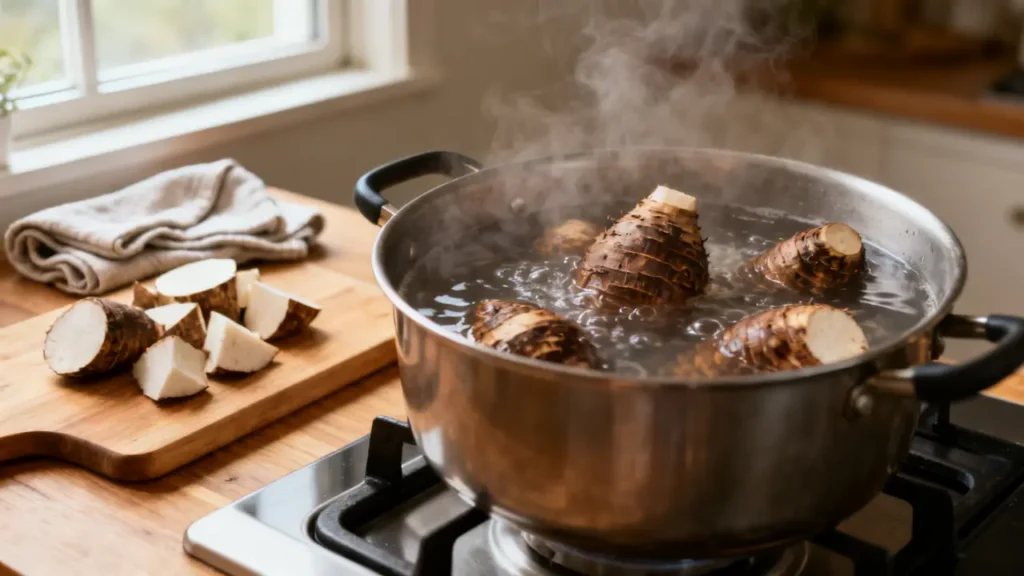

How to boil taro root
The short answer: boil peeled, evenly cut taro in enough water to cover until fork‑tender; expect about 12–15 minutes for 1″ cubes, 20–25 minutes for medium chunks, 30–40 minutes for large pieces, and 30–60 minutes for whole roots. Use a cut‑open slice — cooked taro will be creamy and smooth, not gritty or chalky.
We lead with times because that’s what most people searching “how long to boil taro root” want: reliable ranges tied to piece size, plus a clear doneness test. Rely on the texture test (slice through the center) rather than minutes alone — altitude, root density, and how old the taro is all change cook time.
Why you must cook taro (safety first)
Cook taro because it contains calcium oxalate crystals that sting the mouth and throat and can cause irritation; thorough cooking breaks down or dissolves these crystals so the root is safe to eat. Children, people with kidney issues, and anyone with a known sensitivity should be extra cautious and always make sure taro is fully cooked.
Boiling, steaming, and pressure‑cooking are all effective when done long enough. Some home remedies (soaking, rubbing with vinegar, or tiny amounts of baking soda) are mentioned online, but the safest approach is to cook to the texture cues below rather than rely on chemical tricks that can alter flavor and color.
Types of taro and how that affects cooking time
Taro comes in many sizes: small baby corms (often sold as “baby taro”), medium supermarket roots, and large corms meant for baking. Size and density matter — the bigger and denser the root, the longer it takes to heat through and soften.
Common varieties like dasheen and eddoe look similar but may differ slightly in moisture and fiber; expect about a 5–10 minute difference between similarly sized pieces of denser vs. looser varieties. When in doubt, cut into smaller, uniform pieces to speed and even out cooking.
Common varieties (dasheen, eddoe, baby taro)
Baby taro (small corms) cook faster — they’re great for boiling whole. Large dasheen corms are starchier and hold up to mashing and baking. We’ve tested both: smaller corms can be done 5–10 minutes sooner than the same‑looking larger roots.
Tools & prep — exactly what to do before boiling
Prep matters for safety and even cooking: wear gloves if your skin is reactive, scrub and peel the skin, remove any dark “eyes” or woody core, and cut into uniform pieces so they finish at the same time. Peeling with gloves and using a sharp knife makes the job safer and faster.
Sarah learned the hard way to avoid uneven chunks — crowded uneven pieces produced both undercooked gritty bits and overcooked mush. For best results, aim for uniform 1″ cubes when you want the quickest, most even boiling time.
How to peel taro safely
Wear thin kitchen or nitrile gloves if you’re sensitive — the raw skin and interior can irritate. Trim ends, slice off the skin with a small chef’s knife or vegetable peeler, and remove any stringy core or tough eyes. Discard the peeled skins and wash your hands/gloves after handling raw taro.
Cutting for even cooking
Cut pieces to the same size: 1″ cubes cook fastest and most evenly. If you prefer large chunks for mashing, cut 2″ pieces but expect longer cooking. Uniform cuts mean you can follow a time range confidently instead of babysitting every piece.
Boiling times — the practical chart
Use this size‑based guide as your starting point; always confirm doneness by slicing into the center. Minutes below are ranges — the fork/texture test is the final judge.
- 1″ cubes (small): 12–15 minutes — fork easily slides through; creamy interior.
- 1.5–2″ cubes (medium): 20–25 minutes.
- Large chunks (2″+): 30–40 minutes.
- Whole small taro (baby corms): 15–25 minutes.
- Whole medium/large roots: 30–60 minutes (depends on diameter and density).
- Frozen cubed taro (from frozen): 8–12 minutes (start in boiling water).
Doneness test: insert a fork or paring knife into the center; it should glide in with little resistance and the inside should look smooth and creamy. If the center is still grainy or chalky, return to a simmer and cook longer — undercooked taro is the usual cause of lingering irritation.
Boiling step‑by‑step (recipe card)
Follow these simple steps for reliably cooked taro: cover with water, simmer, and test by slicing. Use the time chart above as a guide, but always confirm by texture.
- Peel and rinse taro; cut into uniform pieces (1″ cubes recommended).
- Place taro in a pot and add cold water to cover by 1–2 inches.
- Add a pinch of salt if desired; bring to a rapid boil over high heat.
- Reduce to a gentle boil/simmer and start timing based on size (see chart).
- Test by cutting a piece open: center should be creamy and fork‑tender. Drain and cool slightly before handling.
Post‑boil finishing: mash with butter and milk for taro mash, or toss cubes with sesame oil and scallions for a warm salad. If you need to speed cook stubbornly dense roots, pressure‑cooking is a better option than adding chemicals (see warnings below).
Pressure cooker / Instant Pot timings
Pressure cooking cuts the time and is excellent for large or whole corms. Use high pressure and a short natural release to avoid crumbling and keep a creamy texture.
Cubed taro (1″ pieces)
Set Instant Pot to High Pressure 8–10 minutes, then allow a natural release for 5–10 minutes before opening. Quick release can break the pieces apart and lead to a mealy texture.
Whole small roots
Cook whole baby corms at High Pressure 12–15 minutes with a natural release of 10 minutes. Use the knife test to confirm — whole roots can vary more than cut pieces, so check one before serving.
For more pressure‑cooker basics and other root veg timings, see our Instant Pot root vegetable guide for reliable tables and best practices.
Other cooking methods & when to use them
Steaming is gentler and preserves more flavor; roasting concentrates sweetness; microwaving works in a pinch but can be uneven. Choose the method that matches your final dish: mash, poi, or roast.
Steaming
Steamed 1″ cubes take about 20–30 minutes, while whole medium roots take 30–45 minutes. Steaming keeps the taro moist and reduces the chance of overcooking the exterior while the center remains chalky.
Baking / roasting
Roast whole corms at 375°F (190°C) for 40–60 minutes, wrapped in foil for even heat. Roasting is great when you want a drier, nuttier flavor for slicing or gratins.
Microwave (quick method)
Microwave cubed taro on high for 6–12 minutes depending on amount, stirring halfway; check texture. It’s fast but can make edges gummy, so it’s best for small batches or emergency prep.
Troubleshooting — common problems and fixes
If your taro is chalky or still stings the mouth, it’s undercooked — return pieces to simmer until the center is creamy. If the taro turns grey or discolored, oxidation is usually to blame; cook and taste — it’s typically safe if cooked through.
Some sources recommend a pinch of baking soda to speed softening because it raises pH, but it can change flavor and color and may reduce nutrients. We recommend longer cooking or pressure cooking before resorting to baking soda.
Personal note: I once undercut a big dasheen because I relied only on the clock and ended up with a chalky center that made my mouth tingle. Since then I always slice a piece open to check for that smooth, creamy interior before serving.
Quick recipes & uses after boiling
Boiled taro is versatile: mash it like potatoes with butter and milk for a simple mash, cool and pan‑fry slices for crisp edges, or use as the base for poi. If you want a full mashed taro recipe, our other articles go deep into seasoning and texture.
For inspiration, try tossing cubes with sesame oil, soy, and scallions, or mash with coconut milk and a pinch of salt for a tropical twist. For Hawaiian poi, cooked taro is pounded and fermented slightly — see our related resources for full poi instructions.
Storage & reheating
Store cooled boiled taro in an airtight container in the fridge for 3–4 days, or freeze up to 3 months. Label pieces or mash so you can reheat appropriately.
Reheat gently in a skillet with a splash of oil or in a 325°F (160°C) oven until warmed through; microwaving is fine for small portions but watch for rubbery edges. Thaw frozen taro in the fridge overnight before reheating for best texture.
Sources & notes on oxalates and nutrition
Calcium oxalate crystals cause taro’s irritation; universities and food safety resources recommend thorough cooking to reduce that risk. At sea level water boils at 212°F / 100°C, but times vary with altitude and corm density — that’s why texture is the ultimate test.
For more detail on oxalates and safe handling, consult your local extension or food safety authority. Practical tip: if you’re following an Instant Pot recipe, consult our Instant Pot root vegetable guide for pressure times and release tips.
Common mistakes to avoid
The biggest mistake is relying solely on minutes — undercooked taro can still irritate. Another common error: uneven pieces that produce mixed texture results. Finally, avoid over‑salting the cooking water if you want a soft, neutral starch for mashing.
Pro tip: cut a few test pieces and taste/feel the center. Creamy equals done; gritty or chalky means more time. If you buy frozen taro, start timing from boiling water and expect 8–12 minutes for cubes.
Internal links for related guides
Want more on pressure cooking or other root veg? Check our Instant Pot root vegetable guide for pressure times and release methods. For extra tips and alternate taro preparations, see our related taro posts around the site.
We also reference older guides on the site for boiling and prepping taro — for quick reference you might find the article titled “How to Boil Taro” helpful as a companion read: How to Boil Taro.


