
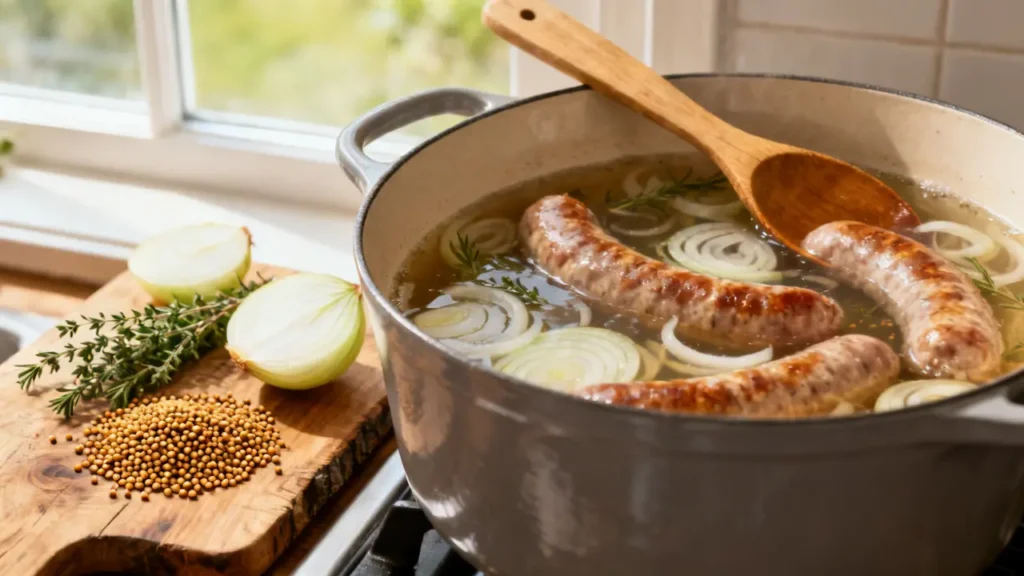

Wondering how long to boil brats before frying? Simmer brats (don’t roll-boil) about 10–15 minutes for 4–6 oz raw links, or 15–20 for thick ones. Poultry needs 165°F (74°C). Brown 3–4 minutes per side for crisp, caramelized casings. Plus thermometer tips and a checklist. Now.
Quick answer — how long to boil brats before frying
The short, safe answer: simmer (not a rolling boil) brats for about 10–15 minutes for standard 4–6 oz raw links, or 15–20 minutes for very thick links, until they reach 160°F (71°C) for pork/beef or 165°F (74°C) for poultry sausages. After poaching, brown in a hot skillet or on the grill for 3–4 minutes per side to get that caramelized casing.
Those minute ranges assume you’re poaching at a gentle simmer (~170–180°F / 77–82°C) and using an instant-read thermometer as your final check. If the brats are pre-cooked, you only need to heat them through for 5–7 minutes in the poaching liquid before browning. Remember: temperature trumps minutes — always verify with a thermometer.
Why simmer (poach) — not boil
Use a gentle simmer when you poach brats because a rolling boil will make the casings rupture and push flavorful juices out of the sausage, leaving a drier finished bite. A simmer around 170–180°F (77–82°C) cooks the interior through without violent agitation of the casing, so the meat stays juicy and the skin remains intact for a great sear later.
What happens at a rolling boil
A rolling boil agitates the sausages so much the casings can split and fat will escape into the water, which both reduces flavor and creates a tougher texture. The violent bubbling also increases evaporation and can concentrate bitter compounds from beer or aromatics if you’re using them. For best texture and flavor, avoid that full boil.
Ideal poaching temperature and why
Keep the liquid at about 170–180°F (77–82°C) — hot enough to cook through in a reasonable time but gentle enough to preserve juices and casing. This temperature range lets proteins set without squeezing out moisture, and it’s low enough that you won’t get the rubbery texture that often follows over-aggressive heat.
Safety temperature — when brats are done
Follow USDA guidance: 160°F (71°C) is the target for brats made from pork, beef, or veal (ground meat), while poultry-based brats need 165°F (74°C). Whole-muscle pork guidance of 145°F does not apply to ground sausage mixtures — sausage must hit the higher temperature to be safe.
Use an instant-read thermometer inserted into the center lengthwise, avoiding fat pockets and the casing. If you’re close on minutes but the temperature isn’t there, keep simmering gently and check again after 2–3 minutes rather than increasing the heat aggressively.
Step-by-step: Poach (boil) brats before frying — exact method
What you need
- Heavy skillet or saucepan large enough to hold brats in one layer
- Instant-read thermometer
- Tongs and a plate
- 1–2 tbsp neutral oil or butter for browning
- Beer, broth, or water for poaching and aromatics (onion, garlic, bay)
We always keep a thermometer and a sturdy pan handy — it’s the only way to reliably hit the safe temp without guessing. For browning you’ll want a wide skillet (12″ for 4–6 brats) so they have room to char without crowding.
Liquid options and flavorings
Beer is the classic poaching liquid — it adds malty, slightly bitter notes — but water with bouillon, apple cider, or a light stock work great if you don’t want beer’s bite. Add aromatics like sliced onions, smashed garlic, peppercorns, or mustard seeds to infuse flavor during the poach. If you use beer, choose a lager or amber rather than an overly hoppy IPA to avoid bitterness.
Poaching method (exact)
Place brats in a single layer in your pan and add enough liquid to come about three-quarters of the way up the links — they don’t need to float. Bring the liquid up to a gentle simmer and maintain about 170–180°F (77–82°C). For average raw brats (4–6 oz) simmer 10–15 minutes; for thick or oversized links, aim for 15–20 minutes. Pre-cooked brats need ~5–7 minutes just to heat through.
Check doneness with an instant-read thermometer in the center of the link: 160°F (71°C) for pork/beef/veal, 165°F (74°C) for poultry. Don’t rely solely on firmness — temperature is the safe, authoritative check.
Browning & frying after poaching — exact technique
After poaching, pat brats dry with paper towels — removing surface moisture is the single best way to get a good sear. Heat a skillet to medium-high (aim for about ~375°F / 190°C skillet surface; oil should shimmer) and add 1–2 tbsp neutral oil or butter for 4–6 brats. Brown the links 3–4 minutes per side until deeply caramelized and crisp in spots.
Pan-fry specifics
Don’t overcrowd the pan — crowding cools the surface and you’ll steam instead of sear. Let each side develop color before turning; resist poking or pressing the brats while they brown. If the pan smokes, reduce heat slightly; you want color, not burnt fat.
Grill or oven finish alternatives
For a smokier finish, grill over medium for 3–5 minutes per side to char and crisp. If you prefer hands-off, broil 3–5 minutes or bake at 425°F (218°C) for 8–10 minutes to brown after poaching. For step-by-step grill finishing, see our guide on how to grill brats.
Pro tips, troubleshooting & tasty variations
Keep these quick rules in mind: don’t prick the casings (you’ll lose juices), always use an instant-read thermometer, and pat brats dry before browning for better Maillard reaction. Rest brats for 3–5 minutes after frying so juices redistribute — that makes a noticeable difference in juiciness.
Common mistake: cranking up the poach to finish faster. That’s how casings split and texture goes rubbery. If you’re short on time, par-poaching a cold link and finishing on the grill works, but trust the thermometer over the clock. For par-boiling variations see our post on par-boil brats and for beer-specific methods try our beer-poached brats guide.
Troubleshooting
If casings split, stop poaching and finish gently on the grill or in a 350°F (177°C) oven to re-develop color; rest to let juices settle. If brats taste bland, poach with aromatics (onion, garlic) or briefly glaze while frying. If they’re rubbery, you likely overcooked — reduce poach temp next time and remove at the correct temperature.
I’ll be honest: early on I kept bumping the heat to speed things up and ended every batch with split casings. After switching to a thermometer and keeping the liquid steady at ~175°F (79°C), the casings stayed intact and the texture improved dramatically — that little discipline changed how we cook brats at home.
Flavor variations
Try apple-cider poach with a mustard glaze for sweet-tangy brats, or beer plus sliced onions for the classic bar food profile. For a lighter option, use low-sodium chicken broth if feeding kids. Small flourishes — a knob of butter in the pan while frying or a swipe of grainy mustard — lift the finished brat nicely.
Quick-reference: times, temps, and frying minutes
Use this quick guide: standard raw brats (4–6 oz) — 10–15 min simmer; large/thick — 15–20 min; pre-cooked — 5–7 min. Target internal temps: 160°F (71°C) for pork/beef/veal, 165°F (74°C) for poultry. Browning: 3–4 minutes per side in a hot skillet or 3–5 minutes per side on the grill.
- Poach temp: 170–180°F (77–82°C)
- Internal temp: 160°F (71°C) pork/beef; 165°F (74°C) poultry
- Poach time: 10–15 min (standard), 15–20 min (thick)
- Browning: 3–4 min/side (skillet)
Frequently Asked Questions
If you want more on finishing techniques, check our guides on how to grill brats and tips for when to tell if sausage is cooked. We test these steps at home so you can skip the guesswork and get juicy, browned brats every time.


