
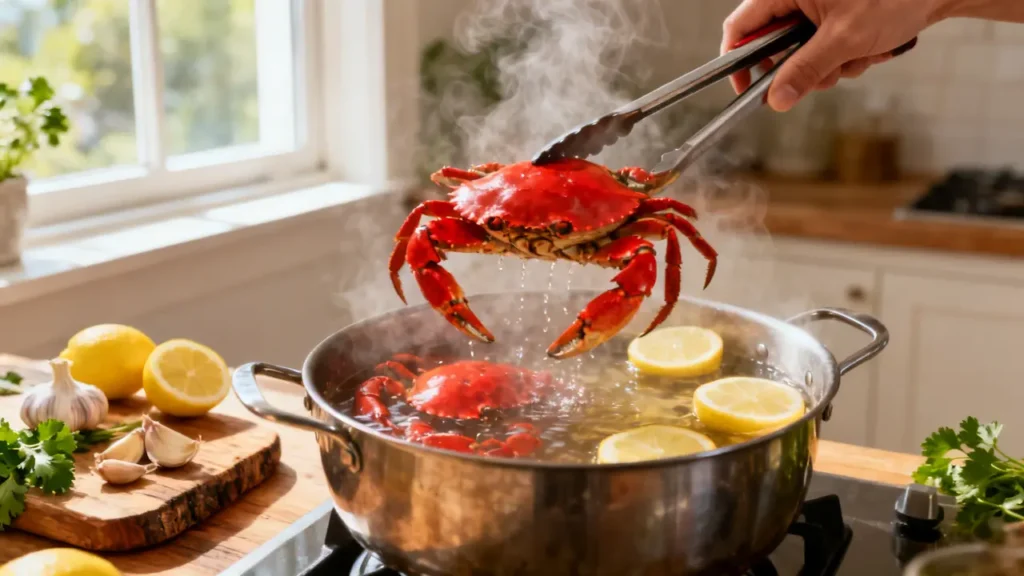

Quick Answer — Best Way to Reheat Boiling Crab
The best way to reheat Boiling Crab is to gently steam or oven-wrap it with a bit of reserved butter or stock so the meat reaches 165°F (74°C) without overcooking. Steam 5–8 minutes for legs, shrimp and crawfish; 350°F (175°C) oven, covered, 10–15 minutes for 1–2 lb portions. Use an instant-read thermometer and add a splash of liquid to keep meat tender and the sauce glossy.
We rank methods by reliability: steaming preserves moisture best, oven-wrap works for large batches, a skillet refreshes tossed dishes, and sous vide gives restaurant-level texture if you have the time. The microwave is a last-resort speed trick — it’s fast but risks sauce separation and rubbery meat if you’re not careful.
Food Safety First: Temperatures, Storage, and Timing
Always follow safe-handling rules: refrigerate leftovers within 2 hours of serving and eat within 3–4 days; freeze for quality up to about 2–3 months. When reheating leftovers, USDA guidance is to reheat to 165°F (74°C) — that’s the safe target we recommend for Boiling Crab to kill any lingering bacteria.
Why the apparent conflict with seafood cook temps? Cooking fresh shellfish often references 145°F (63°C) as the doneness point, but leftover-reheating guidance uses 165°F to ensure safety after storage. If you use gentler methods like sous vide at lower temps, follow the time/temperature pasteurization tables — for example, 140°F (60°C) for 45–60 minutes can be safe if held correctly.
How long can leftover Boiling Crab sit at room temperature?
Leftovers should not be left at room temperature longer than 2 hours (or 1 hour if the ambient temp is above 90°F/32°C). Bacteria multiply quickly at room temperature, so cool portioned pieces in shallow containers to bring them through the danger zone faster.
How long can you keep leftovers in the fridge / freezer?
Store refrigerated Boiling Crab for up to 3–4 days. For longer storage, wrap tightly and freeze for best quality for about 2–3 months. Label portions with date and portion size so you reheat only what you need.
Which Reheating Method Should You Use?
Pick the method based on quantity, equipment, and the texture you want: steam for moist meat, oven for even warming of large batches, skillet for tossed dishes, air fryer/broil to crisp shells, microwave only when speed is essential, and sous vide for precision. We’ll explain why each works and when to choose it.
If you want the sauce and butter to look and taste fresh, choose a method that preserves emulsions and avoids direct high heat on the meat; that’s why we usually start with steaming or oven-wraps and finish with a quick blast under a broiler or in a skillet for texture.
Best for texture: Steaming
Steaming keeps proteins from seizing up quickly because the crab heats in moist, indirect heat; that preserves tenderness and prevents dried-out meat. It’s our default recommendation for most leftover Boiling Crab pieces.
Best for speed: Microwave
Microwave works for single servings when you’re short on time — use 50–70% power and short bursts, cover with a damp paper towel, and stop at 165°F (74°C). It’s high-risk for sauce separation and rubbery shrimp, so use only when necessary.
Best for crisp shells: Air fryer / broiler
Air fryer or broiler can re-crisp shells and edges after gentle reheating; heat briefly at 320–350°F (160–175°C) for 4–8 minutes and finish with a 1–2 minute broil if desired. Always add sauce after crisping to avoid sogginess.
Best for exact control: Sous vide
Sous vide wins when you want perfect texture: vacuum-seal with sauce or butter, then reheat at 140°F (60°C) for 45–60 minutes or up to 165°F (74°C) for faster reheating. If you pick a lower temp, follow pasteurization hold times to stay safe.
Method 1 — Steaming (Best Overall)
To steam Boiling Crab, add 1–2 inches of water to a pot, bring to a simmer, place crab on a rack or in a steamer basket above the water, cover, and steam until the meat reaches 165°F (74°C). For legs, shrimp and crawfish plan on 5–8 minutes; larger cracked pieces or whole crab need 8–12 minutes depending on size.
Don’t submerge shelled pieces into boiling water — the direct heat pumps out moisture and tightens the muscle fibers. Add a couple tablespoons of reserved sauce or seafood stock to the pan if the shells seem dry; the steam will carry flavor back into the meat.
- Single serving: 5 minutes
- Family pack (2–4 lb): 8–10 minutes
- Whole/cracked large crab: 10–12 minutes, check temp
Timing chart by portion size
Use the above timings as a starting point and always verify with a thermometer. Steaming is forgiving — if it’s a bit under, cover and check every 2 minutes; overcooking in steam is less harsh than direct dry heat but still avoid overshooting above 170°F (77°C) to keep texture pleasant.
Method 2 — Oven (Best for Large Batches)
Preheat the oven to 350°F (175°C). Place seafood in a foil pan or baking dish, add reserved sauce or 2–4 tablespoons per pound of water/stock, seal tightly with foil, and bake covered 10–15 minutes for 1–2 lb portions or 20–25 minutes for large or whole crab; finish uncovered 2–3 minutes if you want a bit of char.
The foil trap keeps moisture and sauce from evaporating and warms evenly, which is why the oven is ideal for family packs. If your sauce is thick or oily, stir a little stock into it before adding to the pan so it spreads and reheats uniformly.
Avoid piling shells too high — crowding traps heat unevenly and can leave cold pockets in big batches. If you’re reheating in a hotel pan or single-layer sheet, rotate halfway through for even results.
Quick Methods: Skillet, Air Fryer & Microwave
The skillet is great for tossed dishes (crab mixed with corn, potatoes, or garlic butter), the air fryer/broiler is for crisping shells, and the microwave is a fast last resort when you need one plate warmed now. Each has a trade-off between speed and texture — pick the one that matches your priorities.
Skillet / Stovetop
Heat a skillet over medium-low with 1–2 tbsp butter or oil, add seafood and gently toss for 3–6 minutes until internal temp hits 165°F (74°C). Add sauce at the end and keep heat low to avoid tightening the proteins and making shrimp or crab rubbery.
Air Fryer & Broiler
Preheat to 320–350°F (160–175°C), wrap loosely in foil with a pat of butter, and check at 4 minutes. Broil 1–2 minutes uncovered for color, then add sauce after crisping. This method is fast but can dry meat — keep it brief.
Microwave
Place a single portion in a microwave-safe dish, cover with a vented lid or damp paper towel, use 50–70% power in 20–30 second bursts, and stir/reposition. Total time is often 60–120 seconds depending on portion; always check with a thermometer and re-emulsify sauce with a little butter if it separates.
Troubleshooting & Common Mistakes
The most common mistake is overheating — seafood proteins tighten quickly above ~140°F (60°C), so long exposure to high heat makes meat rubbery. Another frequent issue is sauce separation after microwaving; re-emulsify by warming gently and whisking in a bit of butter or cream.
If your leftovers are underseasoned, finish with a quick drizzle of lemon and melted Cajun butter (we like 2 tbsp butter per pound + 1 tsp lemon juice), or toss briefly in a skillet with garlic and parsley to refresh flavor. To fix dry meat, shred it and toss with warm sauce — it will hide slight dryness and deliver flavor.
Personal note: I once reheated an entire 4‑lb family pack in a covered pan without adding liquid and ended up with dry claws; Daniel made me rescue it by simmering the sauce and gently tossing the meat back in. Lesson learned — always add a splash of stock or reserved butter.
How to Refresh Flavor After Reheating
Finish reheated crab with warm Cajun butter, a squeeze of lemon, or a quick garlic‑parsley toss to brighten flavors and restore gloss. For measurements, melt 2 tablespoons butter per pound of seafood and stir in 1 teaspoon lemon juice and a pinch of cayenne to taste.
If the sauce looks separated, whisk it over low heat with a splash of cream or an extra pat of butter to re-emulsify. For a last-minute crunch, hit exposed shell edges under a broiler for 1–2 minutes and then spoon sauce over the meat so the flavor stays front and center.
Quick Reference Cheat Sheet & Tools
Cheat sheet: Steam 5–8 min (single portions), Oven 350°F covered 10–15 min (1–2 lb), Air fryer 320–350°F 4–8 min, Microwave 50–70% power 60–120 sec. Always check that internal temp hits 165°F (74°C) with an instant‑read thermometer.
We recommend these tools: a tall steamer pot or basket, a reliable instant-read thermometer, an oven-safe foil pan for oven-wraps, and a sous‑vide setup if you reheat often. For detailed product picks, see our leftover seafood reheating guide and the Boiling Crab sauce recipe to refresh your butter and spice blend.
If you reheat a seafood boil that came in a bag, our walkthrough for how to reheat a seafood boil in a bag and the step‑by‑step on how to reheat a seafood boil will save you time and keep sauce where it belongs.


