
Greek macarounes cavatelli are hand-formed pastas that bridge Cretan makarounes and Italian cavatelli: Greek makarounes are usually egg-free and served simply with olive oil, fried rosemary and mizithra, while cavatelli often use semolina and suit richer sauces. Below you will find a tested, weight-based recipe with shaping steps, cooking cues, troubleshooting and storage tips so you can make reliable macarounes at home.
what are Greek macarounes?
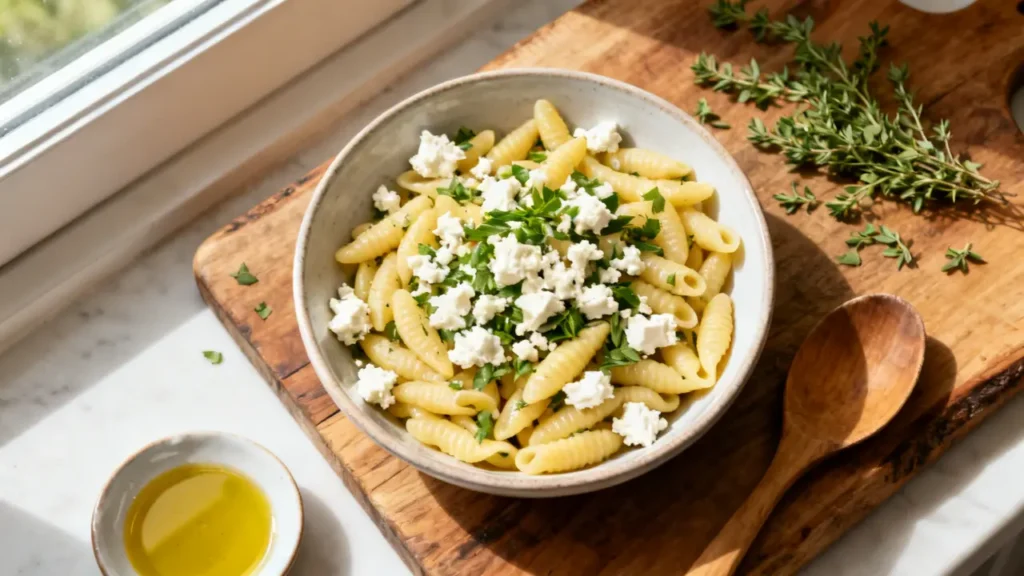
Greek macarounes are a rustic Cretan hand-formed pasta made without eggs in most traditional recipes, which gives them a light, delicate bite and an open surface that catches olive oil and grated mizithra beautifully. They are typically rolled into ropes, cut into short pieces and shaped by dragging or pressing to create a slightly hollowed shell that holds simple toppings.
In Crete and other islands, macarounes are a home-cooked specialty, served with just a drizzle of olive oil, crisped rosemary and a shower of mizithra or a simple tomato sauce depending on the season and mood.
macarounes vs cavatelli, differences and similarities
The short answer: they are very similar hand-shaped pastas but differ in ingredients, texture and traditional pairings. Macarounes are commonly egg-free and lighter, while cavatelli often include semolina or eggs in some regional Italian versions, which makes them denser and chewier.
Shape-wise both are small, shell-like pieces made from ropes of dough, but differences in rope thickness and the shaping motion change the bite and sauce carry. Below are the core contrasts and the reasons they matter in cooking.
- Dough composition: Greek makarounes traditionally use flour and water only; Italian cavatelli commonly include semolina or sometimes egg, affecting color and chew.
- Texture: Higher semolina or egg content produces a firmer, chewier texture that stands up to ragus. Egg-free dough yields a tender, pillowy bite perfect with light dressings.
- Serving styles: Greek toppings are simple: olive oil, mizithra and fried rosemary; Italian pairings include tomato sauces, ragus or brown butter and sage.
tested authentic Greek macarounes recipe
This tested recipe is built for reliability: weight-first measurements, a hydration range to adapt if you use semolina, and clear shaping sizes so cooking times are predictable. Use a scale, and expect a yield for 4 servings.
ingredients (by weight and volume)
We use a flexible flour mix. If you want a firmer bite, swap 100 g of all-purpose for fine semolina. For details on dairy toppings and substitutions see our guide to Greek recipes.
- 400 g all-purpose flour (about 3 cups), or 300 g AP + 100 g fine semolina
- 5 g kosher salt (about 1 teaspoon)
- 200-220 mL lukewarm water (about 3/4 to 1 cup), start with 200 mL
- 15 mL olive oil (1 tablespoon), optional for pliability
- Extra flour for dusting
- 100-120 g mizithra or substitute (ricotta salata or finely grated pecorino)
- Olive oil for dressing, about 45 mL (3 tablespoons) total
- 2 garlic cloves and 1 tablespoon chopped rosemary for frying
equipment needed
- Digital kitchen scale
- Bench scraper and sharp knife
- Rolling surface or board, lightly floured
- Gnocchi/cavatelli board or a fork as an alternative
- Baking sheet or tray for holding shaped pasta
yield and times
This recipe makes about 4 servings, roughly 600-700 g fresh pasta dough, depending on hydration. Active time about 30-40 minutes. Total time including rest 1 hour. Fresh macarounes cook in 2-4 minutes.
step-by-step method
make the dough
Put the flour and salt in a bowl and mix. Make a well, pour in 200 mL lukewarm water and the olive oil if using. Mix with a fork or your hand until a shaggy dough forms, then knead on a floured surface for about 6-8 minutes until smooth and slightly springy. If the dough is too dry, add up to 20 mL more water, a teaspoon at a time. Rest covered for 20-30 minutes.
shape the macarounes
Divide dough into quarters. Roll each piece into ropes about 1.0-1.5 cm in diameter. Cut into 1-1.5 cm pieces. To shape, press and drag each piece across a board or the tines of a fork to hollow them slightly and create ridges. If you prefer, use a gnocchi board or the handle of a wooden spoon.
Smaller pieces cook faster and feel lighter; larger pieces (1.5-2 cm) will need roughly 30-60 seconds longer in the pot. For more shaping tips see our shaping guide and a quick demo on shaping related hand-formed pastas.
drying and holding
Place shaped pieces on a lightly floured baking sheet in a single layer. Cover loosely with a tea towel if you will cook within 24 hours. You can refrigerate raw shaped macarounes for up to 24 hours on a tray, or freeze in a single layer before bagging for up to 3 months.
cooking fresh and frozen macarounes
Use a large pot with plenty of water. Salt the water with about 1 tbsp kosher salt per 3-4 liters (12-16 cups). Fresh macarounes take 2-4 minutes, usually done when they float plus 30-60 seconds. Frozen raw macarounes need 1-2 minutes extra. Test for an al dente bite.
toppings and serving suggestions
Traditionally simple is best: dress warm macarounes with 3 tbsp olive oil, top with 100-120 g mizithra and sprinkle fried rosemary and garlic. For a quick tomato version, saute 2 cloves sliced garlic in 2 tbsp olive oil, add 1 can crushed tomatoes, simmer 10 minutes, toss with pasta.
Pairings: light-bodied white wines or rosé work well with the olive oil and cheese version, while a medium-bodied red complements tomato or meat ragú sauces.
troubleshooting and common mistakes
If the dough is sticky, it usually means you need more flour or a brief rest so the flour hydrates. If it is dry and cracking, add a teaspoon of water at a time and knead briefly. Overworking yields a tough pasta because of excess gluten development; let the dough rest to relax the gluten.
Personal note, from my experience: I used to add water too quickly and ended up with slack dough that spread when shaped. I now always start with 200 mL and add only if the dough feels dry after a few turns of kneading. That small habit fixed most of my sticky-dough problems.
- If macarounes fall apart in the pot, the dough probably needed more kneading or a longer rest. Try a 10-minute extra knead and a 30-minute rest next time.
- To prevent sticking while shaping, work with lightly floured hands and a lightly floured board. Too much flour in the dough makes it dry after cooking.
make-ahead, storage and reheating
Refrigerate raw shaped macarounes on a tray for up to 24 hours. Freeze on a tray until solid then transfer to a bag for up to 3 months. Cook from frozen adding 1-2 minutes to the cook time. Cooked leftovers keep in the fridge for 3-4 days and reheat gently in a skillet with a splash of water or olive oil.
flour choices, substitutions and nutrition
All-purpose flour makes tender, everyday macarounes. Adding 100 g fine semolina produces a toothsome texture that stands up to thicker sauces. For cheese alternatives to mizithra try ricotta salata or finely grated pecorino. Gluten-free options need xanthan or psyllium and will behave differently, so expect a different texture.
Estimated nutrition per serving: about 480 kcal, depending on cheese and oil. Carbs and protein vary by topping and exact flour mix.
notes, tips and final thoughts
Short checklist: use a scale for the best results, start with 200 mL water, roll ropes 1.0-1.5 cm thick and cut 1-1.5 cm pieces, rest dough 20-30 minutes, and cook fresh 2-4 minutes. For more on cooking pasta al dente see our guide to cooking pasta al dente.
We test recipes on our home stove, not in a restaurant kitchen, so these are realistic, repeatable steps you can follow without special equipment. Try making a small batch first and adjust rope size to suit your preferred bite.

Greek macarounes cavatelli
4
servings30
minutes10
minutes480
kcal1
hourA tested, weight-based Greek makarounes (macarounes) recipe for 4 servings with simple toppings and storage tips.
Ingredients
400 g all-purpose flour (about 3 cups), or 300 g AP + 100 g fine semolina
5 g kosher salt (about 1 teaspoon)
200-220 mL lukewarm water (about 3/4 to 1 cup), start with 200 mL
15 mL olive oil (1 tbsp), optional
Extra flour for dusting
100-120 g mizithra or substitute (ricotta salata or pecorino)
Olive oil for dressing, about 45 mL (3 tbsp)
2 garlic cloves and 1 tbsp chopped rosemary for frying
Directions
- Combine flour and salt, make a well and add 200 mL lukewarm water and 15 mL olive oil if using, mix until a shaggy dough forms.
- Knead on a floured surface for 6-8 minutes until smooth and slightly springy; add up to 20 mL more water only if the dough is dry.
- Cover and rest the dough for 20-30 minutes at room temperature to relax the gluten.
- Divide into quarters, roll each into ropes about 1.0-1.5 cm diameter and cut into 1-1.5 cm pieces.
- Shape each piece by pressing and dragging across a gnocchi board or fork to create a hollowed shell with ridges.
- Place shaped macarounes on a lightly floured tray in a single layer, cover loosely if cooking within 24 hours, or freeze on a tray for long storage.
- Bring a large pot of water to a rolling boil and season with 1 tbsp kosher salt per 3-4 liters water.
- Cook fresh macarounes 2-4 minutes until they float plus 30-60 seconds; frozen raw pieces need 1-2 minutes extra.
- For the simple topping, heat 2 tbsp olive oil, add sliced garlic and 1 tbsp chopped rosemary, fry until golden and aromatic and toss with cooked macarounes and 100-120 g grated mizithra.
Notes
- Start with 200 mL water and adjust up to 220 mL if dough is dry.
Roll ropes 1.0-1.5 cm thick and cut 1-1.5 cm pieces for consistent cooking.
Freeze shaped pieces on a tray first, then bag for up to 3 months.
What is the difference between Greek makarounes and Italian cavatelli?
Greek makarounes are usually egg-free and lighter, often served simply with olive oil, fried rosemary and mizithra, while Italian cavatelli commonly include semolina or eggs in some regional versions, producing a firmer, chewier texture suited to heavier sauces.
Are makarounes and cavatelli made using the same traditional technique?
Yes, both are hand-formed from ropes of dough that are cut and shaped by pressing or dragging, but the specific dough composition and rope size differ, which changes the final texture and how sauces cling to the pasta.
What are the traditional sauces and pairings for makarounes and cavatelli?
Makarounes are traditionally dressed simply with olive oil, fried rosemary and mizithra cheese, or a light tomato sauce, while cavatelli often pair with ragus, meat sauces or brown butter and sage depending on the Italian region.
Where did makarounes and cavatelli originate and how are they connected?
Makarounes are traditionally Cretan and island Greek home pastas, while cavatelli come from southern Italy; both evolved independently as hand-formed pastas but share the same practical shaping approach that turns small dough ropes into hollowed, sauce-catching pieces.
What ingredients are used to make makarounes and cavatelli?
Makarounes typically use flour, water and salt and are usually egg-free, while cavatelli recipes vary and often include semolina or eggs; you can blend AP flour and semolina to control chew and color.