
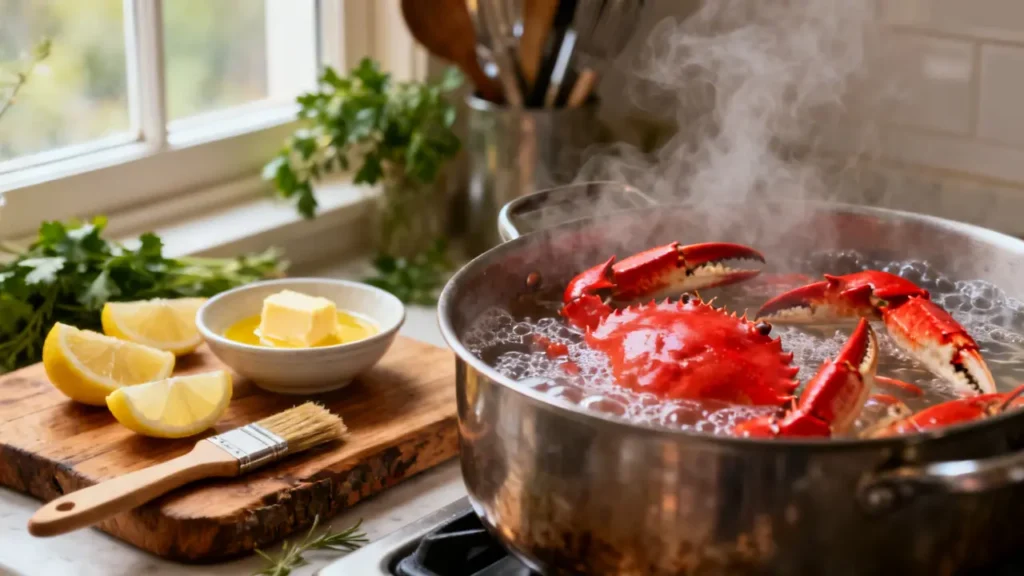

How to Boil Crab Claws
We’ll teach you how long to boil crab claws for every common situation—raw, live, thawed, or pre-cooked frozen—and give exact start-times, salt/brine ratios, and visual doneness checks so you don’t overcook them. This guide centers on timing first, then covers prep, thawing, reheating and troubleshooting. Follow the quick timing chart below if you’re in a hurry, and read the sections after for why those times work and how to fix problems if they come up.
Quick answer — How long to boil crab claws
Boil crab claws by type and size: pre-cooked frozen snow or king crab claws need 4–6 minutes to reheat; raw small claws about 6–8 minutes; raw large claws 8–10 minutes. Start timing when the water returns to a full rolling boil after you add the crab. These times get you opaque, flaky meat and—for safety—an internal temperature of 145°F / 63°C.
Below is a quick reference; we explain the why and give step-by-step techniques afterward so you know how to start the clock and how to check doneness. If you’re reheating precooked claws, treat them like a gentle warm-through, not a full cook.
- Pre-cooked frozen (snow/king): 4–6 minutes (reheat)
- Raw small claws (2–4 oz): 6–8 minutes
- Raw large claws (4–8 oz): 8–10 minutes
- Reheating cooked crab: steam 5–7 minutes or oven 350°F/175°C for 8–10 minutes
Types of crab claws (and why timing differs)
Timing varies because of two big factors: whether the crab is raw or already cooked, and the size/thickness of the claw. Pre-cooked frozen claws only need enough time to heat through because the meat is already cooked; raw claws need enough time to bring the interior to 145°F/63°C safely without overcooking the delicate meat.
Size matters because thermal mass increases with size—thicker claws take longer for heat to get to the center. Species also differ: snow crab claws are thinner and heat faster, while king/crab or large Dungeness claws are meatier and need more time.
Raw/live claws vs pre-cooked/frozen claws
Raw or live claws must be cooked until the meat is opaque and reaches 145°F / 63°C internally; that’s a full cook. Pre-cooked frozen claws are typically boiled for only a few minutes to reheat and avoid drying or rubbery texture. Always check packaging—if it says “fully cooked,” treat it as reheating, not cooking.
Typical species & size categories
Common types you’ll see at the market: snow crab (thin shell, smaller meat portions), king crab (large, dense meat), Dungeness (whole-crab clusters) and smaller market claws. We categorize by weight per claw: small 2–4 oz, large 4–8 oz. Use the weight category to pick the time from the quick chart.
Equipment & ingredients
You don’t need fancy gear to boil crab claws, but a few tools make the job cleaner and faster: a large pot with a lid, long tongs, a digital thermometer, a crab cracker and a bowl for shells. A thermometer and tongs are the difference between guesswork and consistently great results.
- Equipment: 6–8 quart pot (or bigger for clusters), lid, seafood tongs, thermometer, crab crackers, kitchen shears
- Seasoning basics: kosher salt, lemons, 1–2 bay leaves, 1 tbsp Old Bay (optional) per 2–3 quarts
- Quick brine: 2 tbsp kosher salt per quart (≈1/4 cup per gallon), plus lemon halves and a couple bay leaves
Prep: thawing and cleaning
Thawing and cleaning set you up for even cooking; rushed or partial thawing causes uneven temperature and longer boil times. Plan ahead and thaw in the fridge overnight for the best texture; if you must speed-thaw, use a sealed bag in cold water for 20–30 minutes per pound.
Thawing safely (fridge vs quick cold-water)
Refrigerator thaw: place claws on a tray in the fridge overnight—this keeps them cold and prevents the outer meat from warming. Quick-thaw: keep claws sealed in plastic and submerge in cold water, changing water every 20 minutes; small clusters thaw in 30–45 minutes. Never thaw at room temperature.
Rinse and trim — handling clusters and ice glaze
Rinse off any ice glaze or packaging juices and separate clusters so water circulates. Trim ragged bits of shell or membranes with kitchen shears; leaving an ice glaze on will chill the water and extend cook time, so remove it when possible. If claws are sold pre-split, they’ll heat through faster.
Step-by-step: How to boil crab claws (base method)
Boiling crab claws is simple once you know when to start the clock: bring a seasoned pot to a rolling boil, add claws, wait until the water returns to a full boil, then start the timer. Start timing on the return to a full rolling boil—that’s the reliable benchmark that keeps results consistent.
We use a light brine in the water to season meat gently; heavy seasonings can mask sweet crab flavor. Keep a lid handy to bring the water back to a boil quickly, and don’t overload the pot—crowding drops the temperature and lengthens cooking time.
- Fill a pot with enough water to cover claws comfortably (6–8 quarts for a batch). Add 2 tbsp kosher salt per quart, 1–2 halved lemons, and 1–2 bay leaves (or 1 tbsp Old Bay per 2–3 quarts).
- Bring to a vigorous rolling boil over high heat with the lid on to speed heating.
- Add claws in batches so you don’t cool the water; immediately cover and wait until the water returns to a full rolling boil.
- Once the pot is back to a rolling boil, start the timer and follow the timing chart (e.g., raw large claws: 8–10 minutes).
- When time’s up, remove claws with tongs and transfer to a bowl to rest 2–3 minutes; serve hot with butter or chill for later use.
Exact boil times (detailed chart + notes)
Use these times as your baseline and adjust for claw thickness and starting temperature—frozen to fridge-thawed cuts a minute or two off the higher end. Always start timing when water returns to a full rolling boil after adding the crab; that’s the consistent method professionals use.
If you’re reheating pre-cooked claws, err on the lower end of the range and check early to avoid rubbery meat. Below are typical times by type and size.
- Pre-cooked frozen snow or king crab claws: 4–6 minutes (reheat). Start timing when water returns to a boil. If frozen solid, add 1–2 minutes.
- Raw small claws (2–4 oz): 6–8 minutes once water returns to a boil.
- Raw large claws (4–8 oz): 8–10 minutes once water returns to a boil.
- Whole Dungeness crab (context): 12–15 minutes for first pound + 3 minutes per extra pound (useful if you’re also cooking whole crabs).
- Reheating cooked crab (general): steam 5–7 minutes, or bake at 350°F / 175°C for 8–10 minutes wrapped in foil.
Common conflict: some recipes say king crab needs only 2–3 minutes—this can work for very thin pre-cooked pieces, but we recommend 4–6 minutes as safer, especially for frozen legs, to ensure even reheating without overcooking. If in doubt, check at the lower time and add a minute if needed.
How to tell when crab claws are done
The clearest indicators are visual and textural: meat should be opaque and white, flake easily, and pull away from the shell slightly. If the meat is translucent or jelly-like, it’s undercooked; if it’s stringy and rubbery, it’s overcooked. Use a thermometer for confirmation.
Visual cues
Look for bright white, opaque meat with no glossy or translucent areas and clean separation from the shell when cracked. In cooked crab the meat flakes into layers; that flaking is a reliable sign you’ve reached doneness without guessing.
Texture cues
Properly cooked crab meat is firm but tender and springs back slightly when nudged—never tough or rubbery. If it feels overly tight, you’ve gone too long; salvage by chopping and using in crab cakes where texture is masked.
Internal temperature target
The USDA/FDA guidance for cooked shellfish is 145°F / 63°C as a safe target for cooked meat. Use an instant-read thermometer inserted into the thickest part of the claw meat (through a seam or a small shell crack) to check without destroying presentation.
Seasoning, serving & cracking tips
Keep seasoning simple so the crab’s natural sweetness shines: a light brine, lemon, and melted butter are usually all you need. Drawn butter is the classic—warm gently so it doesn’t separate—and add minced garlic or lemon for variety.
For cracking, use a crab cracker or the back of a chef’s knife against the shell joints; kitchen shears make removing the meat from thin legs easy. If you need drawn butter recipes, try our garlic-butter variation linked below for a quick sauce that pairs perfectly.
- Classic: melted butter with a squeeze of lemon
- Garlic-lemon butter: melted butter, 1 clove minced garlic, 1 tsp lemon zest, pinch salt (warm gently)
- Spicy mayo: mayo + sriracha + lemon for a chilled dip
Related reading: compare boiling vs steaming and method details in our piece on how to cook crab legs, and if you want a great butter sauce try our garlic-butter sauce for seafood.
Troubleshooting & common problems
Rubbery crab is almost always overcooked; undercooked crab is unsafe and tastes watery. Fix overcooked claw meat by using it cold in crab cakes or chopping for mixed dishes, and if undercooked, return to boiling water just long enough to finish (check often).
My crab is rubbery — what happened?
Overcooking is the main culprit—too high heat or too-long times squeeze moisture out of the meat and tighten proteins. If it’s just a bit firm, slice and use in a dish where texture is less noticeable, or chop into a crab salad or crab cakes.
My crab is undercooked — next steps
Return claws to boiling water and check every minute; use your thermometer to hit 145°F / 63°C. Smaller claws will finish quickly—don’t leave them in too long on the rescue cook or you risk overcooking.
Can I boil pre-cooked frozen crab?
Yes—treat pre-cooked frozen claws as reheating: 4–6 minutes in boiling water or 5–7 minutes steaming. For guidance on reheating whole seafood trays, see our notes on reheating and the linked reheating guide.
Storage & food safety
Store cooked crab in the fridge at 40°F / 4°C or below and eat within 2 days. Freeze cooked meat airtight for 2–3 months. When reheating, use gentle steam or oven methods to avoid drying the meat.
Reheating leftover crab claws (best methods)
Best method: steam gently for 5–7 minutes—this adds moisture back without overcooking. Oven method: wrap claws in foil with a splash of water and bake at 350°F / 175°C for 8–10 minutes. Avoid high direct heat or long microwave blasts that make meat rubbery.
Sous-vide (if you have it) is ideal for reheating: 130°F / 54°C for 20–30 minutes preserves texture. For quick reheats, dunk in simmering (not rolling) water for 3–4 minutes for pre-cooked pieces.
Quick printable cheat-sheet / timing card
Here’s a one-screen cheat-sheet: Pre-cooked frozen: 4–6 min; Raw small: 6–8 min; Raw large: 8–10 min. Start timing on the return to a rolling boil and use visual cues plus an instant-read thermometer to confirm 145°F / 63°C.
- Start: rolling boil → add claws → wait to return to rolling boil → start timer
- Brine: 2 tbsp kosher salt per quart (≈1/4 cup/gal)
- Reheat: steam 5–7 min or oven 350°F / 175°C for 8–10 min
Sources & further reading
We follow USDA/FDA guidance for seafood safety (internal temp 145°F / 63°C) and tested timing across small and large claws in home kitchens to reach the ranges above. For steaming vs boiling, see our comparison in the crab legs post linked earlier, and for sauces try our garlic-butter recipe.
Internal links you might find useful: how to cook crab legs, garlic-butter sauce for seafood, and a whole-crab timing piece at Dungeness crab boil times. We tested these methods across snow, king and Dungeness claws for the guide above.
Personal kitchen note
I once tried boiling frozen precooked claws straight from the bag and left them in too long—resulting in rubbery meat and disappointed guests. Since then I always thaw in cold water if I’m short on time and check at the 4-minute mark for pre-cooked pieces; small changes like that keep texture spot-on.


