
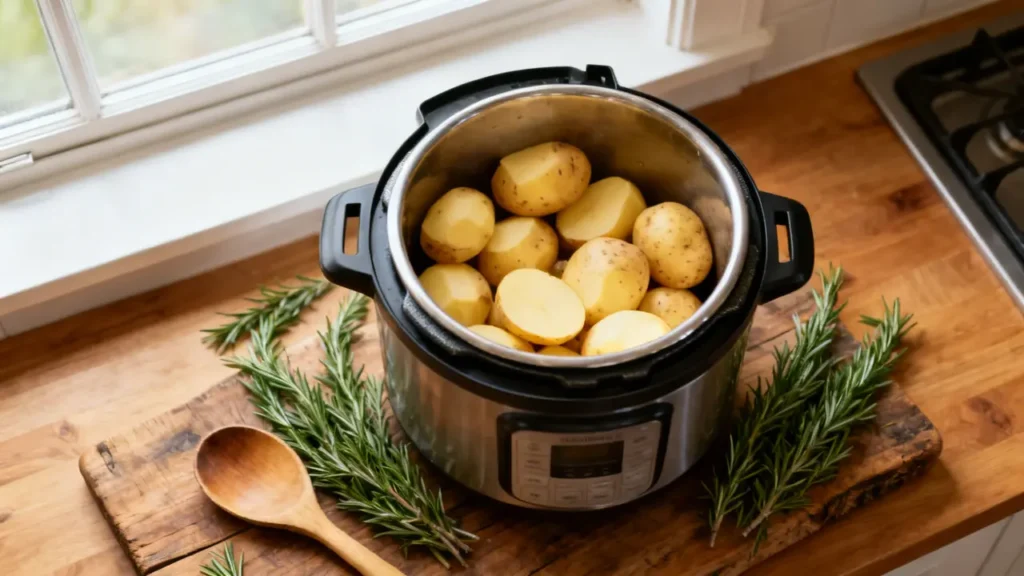

Quick Answer — Boil Potatoes in 3 Steps
Yes — you can ‘boil’ potatoes in a pressure cooker quickly and predictably: place potatoes on a trivet or in a steamer basket above 1 cup (240 ml) water, seal the cooker, cook at HIGH pressure for the time that matches the cut/size, then use the release method below to stop carryover cooking. This method is fast and keeps potatoes from sitting in water and becoming waterlogged.
Follow these three basic steps: add water, place potatoes on a trivet/steamer basket, pressure‑cook on High and release according to size. Use a quick release for small/cubed pieces and a short natural release for large whole potatoes so they finish gently. Below is a scannable cheat sheet with the times you’ll use most.
- Cubed 1″ (2.5 cm): 2–3 minutes — Quick release
- Halved small/new (1–1½” / 2.5–3.8 cm): 4–6 minutes — Quick release
- Whole small/new (≤1½” / 3.8 cm): 6–8 minutes — Quick release
- Whole medium (2–2½” / 5–6.5 cm): 8–10 minutes — Natural release 5 min, then quick
- Whole large russet (3+” / 7.5+ cm): 12–15 minutes — Natural release 10 min, then quick
- Frozen potatoes: add 2–3 minutes to times above
What You’ll Need
For pressure‑cooking potatoes you only need a pressure cooker (electric or stovetop), a trivet or steamer basket, and measuring cups for water. A 6‑quart Instant Pot is our go‑to for home cooking and hits the sweet spot for capacity and speed.
Equipment
Use a pressure cooker or Instant Pot that seals well and has a Manual/Pressure Cook (High) setting. A trivet or steamer basket keeps spuds out of the water so they steam instead of boiling in liquid; this prevents sogginess and gives more even results. A silicone sling or long tongs make removing hot potatoes safer and easier.
Ingredients & Water Volumes
For most 6‑quart electric pressure cookers we recommend a minimum of 1 cup (240 ml) water. If you use a basket, do 1¼–1½ cups (300–360 ml) for extra steam buffer or when using an 8‑quart unit, and always check your manual for model minimums. High pressure is the setting to use; salt after cooking if you’re saving for salad.
A trivet/basket matters because steam—not immersion—cooks the potatoes evenly; we prefer this for potato salad and roasting finishes. If you want to read more about cooking potatoes specifically for mashing, see our guide to boiling potatoes for mashed potatoes, and for Instant Pot–specific set‑ups check a related post about boiling potatoes in an Instant Pot.
Step‑by‑Step Method
Place 1 cup (240 ml) water into the pot, insert the trivet or a steamer basket, add potatoes in a single layer or slightly stacked, seal, and set to High pressure for the time matching the cut. When the cooker beeps, follow the release method for the size of potato you used and check with a fork. Drain or remove immediately and finish according to your recipe.
Be mindful not to overfill: follow your appliance’s max fill line and keep potatoes to a single layer if possible for most even results. Always ensure the float valve is down and the vent is set to seal before you start; when releasing pressure, use a long utensil and stand back to avoid scalding steam.
- Pour 1 cup (240 ml) water into the pot (1.25–1.5 cups for 8‑quart or basket setups).
- Place trivet or basket, add potatoes (cut uniformly) and close lid. Seal vent.
- Pressure Cook (Manual) on High for the time in the chart below.
- Release pressure as recommended (quick or short natural), open, and test with a fork.
- Remove with tongs/sling, cool if needed (ice bath for salad), or mash/finish.
Pressure‑Cooking Times & Release Method
Use these times at High pressure; they’re tested in a 6‑quart electric pressure cooker and tuned for even results: small pieces need very short cooks, while whole large russets benefit from a short natural release. Adjust +2–3 minutes for frozen spuds and add ~1–2 minutes at altitude above ~3,000 ft (900 m).
Time Chart (High pressure) and Release
Short rule: Quick release to stop cooking for small/cubed pieces; natural release for 5–10 minutes for larger whole potatoes so they finish gently without splitting. If you need a printed cheat sheet, the line below is a one‑sentence summary you can copy.
- Cubed 1″ (2.5 cm): 2–3 minutes — Quick release
- Halved medium/new (1–1½” / 2.5–3.8 cm): 4–6 minutes — Quick release
- Whole small/new (≤1½” / 3.8 cm): 6–8 minutes — Quick release
- Whole medium (2–2½” / 5–6.5 cm): 8–10 minutes — Natural release 5 min, then quick
- Whole large russet (3+” / 7.5+ cm): 12–15 minutes — Natural release 10 min, then quick
- Frozen: add 2–3 minutes to any time and check doneness
Why the release choice matters: Quick releasing small pieces stops carryover cooking immediately so they don’t turn mushy; letting large whole potatoes rest under pressure for 5–10 minutes lets the center finish without violent splitting. If a large potato splits with a quick release it’s usually from the sudden pressure change — that’s why we recommend a brief natural release for them.
How Much Water to Use & Why
Use a minimum of 1 cup (240 ml) water for a 6‑quart electric pressure cooker; if you use a basket or have an 8‑quart, use 1¼–1½ cups (300–360 ml) to ensure consistent steam and avoid the burn warning. Too little water can prevent pressure from building; too much water lets potatoes sit and become soggy.
I learned the hard way that adding too much water (we were trying to be ‘safe’) turned Yukon Golds into waterlogged blobs for potato salad. Now I stick to the minimum: 1 cup for 6‑quart, or 1¼ cups if I’m crowding a basket. The trivet/basket means the potatoes steam, not simmer in liquid, and you get firmer edges and less nutrient loss.
Model note: always consult your cooker’s manual for its minimum liquid requirement and max fill level. If you get a burn notice, stop, check there’s enough liquid and that the sealing ring and vent are properly positioned.
Post‑cooking Handling (for salad, mash, or serving)
How you treat potatoes right after pressure cooking depends on the final dish: quickly cool for potato salad, drain and dry for serving whole, or mash while still hot for the creamiest texture. Immediate handling stops carryover cooking and ensures the texture you want.
For potato salad
After a quick release, plunge the potatoes into an ice bath for 5–10 minutes to stop cooking and lock the texture. Cooling quickly prevents them from turning gluey, makes peeling easier (if you left skins on and want them off), and firms them up for mixing with dressing.
For mashed potatoes
Drain hot potatoes, return them to the warm pot for a minute to let steam escape (this dries them slightly), then mash with hot milk or cream and butter for the fluffiest result. Mash while still hot so they absorb liquid evenly and you avoid gluey texture from overworking cooled starches. For tips on variety choice, see our page on Yukon Gold potatoes.
For serving whole
Drain, pat dry, and toss hot potatoes with butter, olive oil, herbs, or a quick garlic finish. Removing excess surface moisture and serving immediately gives a better mouthfeel than leaving them in the cooker to steam and soften further.
Troubleshooting & Common Mistakes
If potatoes are undercooked, return to High pressure for another 1–3 minutes (cubed pieces need only 1 minute); quick release and test again. If they’re mushy, it usually means overcooking, too much water, or very small uneven pieces — use them for mash or next time reduce time by 1–2 minutes.
Other typical problems: split potatoes (from rapid QR on large whole spuds), burn notices (not enough liquid or stuck bits under the liner), and uneven doneness (pieces not cut to uniform size). Fixes are straightforward: adjust times, cut uniformly, use the trivet, and follow model fill limits.
Extra scenarios: frozen potatoes need +2–3 minutes; at high altitude add ~1–2 minutes above 3,000 ft. Capacity note: a 6‑quart Instant Pot fits roughly 8 medium Yukon Golds (about 2–2.5 lb / 900–1,100 g) comfortably; don’t jam it full — steam circulation matters.
Safety & Best Practices
Always check the sealing ring, ensure the vent is set to Sealing before cooking, and never force the lid open while the float valve is up. When quick‑releasing pressure, keep hands and face clear of steam and use a long utensil to flip the valve; use oven mitts or a silicone sling to remove hot potatoes.
For longer natural releases, tilt the cooker’s vent slightly with a long spoon to control steam if you’re nervous, and wait until the float valve drops before opening. If you see a burn notice, turn the cooker off and check for adequate liquid and a clean bottom — stuck food can trigger false burn errors.
Want recipe ideas? Pressure‑cooked potatoes are perfect for mashed potatoes, potato salad, or finishing in a skillet for crispy home fries. For par‑boiling before air‑frying or roasting, check our note on par‑boiling for air‑frying and the mashed potato how‑to above.
Printable Cheat Sheet (One‑line)
Place potatoes on a trivet over 1 cup (240 ml) water, pressure cook on High: cubed 1″ 2–3 min QR; halved small 4–6 min QR; whole medium 8–10 min NR 5 min then QR; whole large 12–15 min NR 10 min then QR. Add 2–3 min for frozen.


