
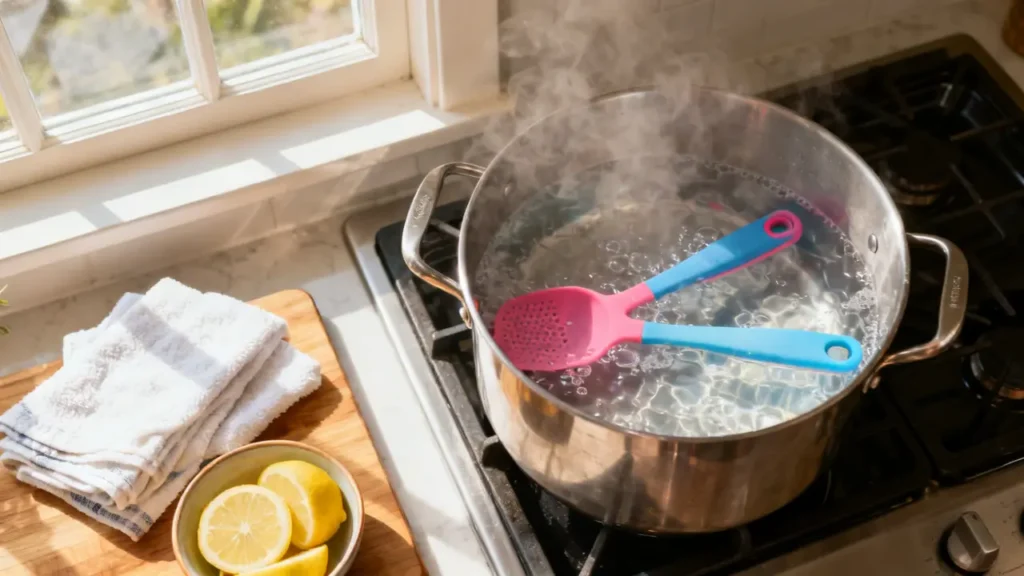

We get asked all the time: how long to boil silicone to sterilize. The general, safe rule is to fully submerge food‑grade silicone and maintain a rolling boil for 3–5 minutes, using 5 minutes for baby nipples, pacifiers, or after illness. Always follow the manufacturer’s guidance when it differs.
How long to boil silicone to sterilize
The direct answer: boil fully submerged silicone for 3–5 minutes — choose **5 minutes** for infant items (nipples, pacifiers) or when you need a conservative approach after illness. For routine kitchen tools like spatulas or baking cups, **3 minutes** is usually sufficient and avoids unnecessary wear. If a manufacturer gives a different time, follow that instruction; silicone formulations vary and brands know their limits.
Why those numbers? Water boils at **100°C / 212°F**, and maintaining a rolling boil for several minutes reliably kills common bacteria and viruses on surfaces. Boiling is simple, fast, and uses only water — but effectiveness depends on full submersion and direct contact with the hot water, so items that float or have hollow parts need special attention.
Can you boil silicone?
Yes — most food‑grade silicone is thermally stable well above boiling: many bakeware pieces tolerate **220–260°C (428–500°F)**, so boiling at **100°C / 212°F** is safe for pure silicone. That said, items with mixed materials, glued parts, or plastic/metal attachments may not be safe to boil.
Manufacturers use different curing methods (platinum or peroxide), but for home use the practical takeaway is simple: **pure, food‑grade silicone handles boiling**; anything with wood, painted surfaces, springs, or glued seams needs the manufacturer’s OK first. If in doubt, skip boiling and use alternative sanitizing methods described below.
When do you need to sterilize silicone?
Sterilize silicone when sterility matters: before first use of baby items, after illness, if something unsanitary touched the item, or when storing long‑term. For everyday cleaning you can usually rely on hot soapy water or the dishwasher; sterilization is for extra assurance.
For baby gear we recommend sterilizing at first use and after suspected exposure to sickness; for menstrual cups sterilize at the start and end of each cycle or as your manufacturer recommends. For kitchen tools used with ready‑to‑eat foods, a regular dishwasher clean is fine most of the time; sterilize only if you need extra protection.
Boiling vs other sterilizing methods — pros and cons
Boiling is cheap, fast, and chemical‑free: submerge in water and keep a rolling boil for the recommended time. Alternatives like dishwasher sanitize cycles, steam sterilisers, chemical sterilizers (dilute bleach/sterilizing tablets), or UV boxes each have tradeoffs in speed, accessibility, and suitability for silicone.
Dishwashers with a high‑temp sanitize cycle (typically **60–70°C / 140–158°F**) can sanitize but don’t reach boiling temperatures; they’re convenient for cookware. Chemical sterilizers are useful for items with non‑silicone parts you can’t boil, but require careful rinsing. Steam sterilisers are quick and baby‑item friendly but cost more. Pick the method that matches your item’s construction and manufacturer guidance.
Step‑by‑step: How to boil silicone safely
Follow a consistent routine so you actually get sterilized silicone instead of a guess. First, inspect for mixed materials or warnings, wash with soap and rinse, choose a pot large enough to fully submerge, add cold water (avoids thermal shock), bring to a rolling boil, time it, and remove with clean tongs to air‑dry.
- Inspect: stop if item has metal, wood, glued parts, electronics, or a manufacturer warning against boiling.
- Pre‑wash: scrub with hot soapy water and rinse to remove grease or residue.
- Pot prep: place item in pot, cover with cold water so it’s fully submerged (this reduces floating and thermal shock).
- Boil: bring to a rolling boil and maintain for **3–5 minutes** (use 5 minutes for baby items or after illness).
- Remove & dry: use clean tongs, place on a clean towel or rack, and air‑dry completely before storing.
- Store: keep in a clean, dry container until use.
Pro tips: put a small, heat‑proof weight (a metal spoon or a clean heat‑proof lid) on top of items that float, or use a rack to prevent direct contact with the pot bottom which can cause hot spots. Never add oil to the water — it reduces heat contact and makes removal messy.
Recommended boiling times by item
Different silicone items have slightly different recommendations based on risk and construction. Use this as a quick reference: **5 minutes** for baby feeding parts and pacifiers; **3–5 minutes** for menstrual cups and kitchen utensils; **3 minutes** is usually enough for routine kitchen sanitizing.
- Pacifiers & bottle nipples: 5 minutes — first use and after illness are the priority. See our full guide to sterilize baby bottles.
- Baby bottle silicone parts: 5 minutes unless manufacturer says otherwise.
- Menstrual cups: 3–5 minutes; keep the cup from touching the pot bottom — read the manufacturer’s note and our menstrual cup sterilization guide.
- Silicone spoons, spatulas, molds, baking mats: 3 minutes for routine sterilizing; 5 minutes when you want extra assurance.
- Items with valves, adhesives, or metal springs: do not boil — follow manufacturer instructions or use a chemical/steam option.
Quick default: if in doubt, choose 5 minutes for baby/infant items and 3 minutes for non‑critical kitchen tools. Manufacturers sometimes recommend 3 minutes; that’s acceptable for many items, but we err conservative for infants.
Common problems and troubleshooting
Silicone floats, traps water, discolors, or smells — and each issue has a fix. Floating is the most common reason boiling fails (items only partially exposed); weigh items down or place a smaller pot lid to keep them submerged. Hollow pacifiers can trap water — shake, squeeze, and let them drain with the nipple pointing down; if water stays, squeeze air through repeatedly and finish drying upright.
I learned the hard way that tiny pacifiers will ride the surface and escape sterilization. After one worrying incident we always pre‑fill the pot with cold water and hold lightweight items down with a clean metal spoon or use a steam basket to keep them submerged. That small change made our sterilization reliable every time.
Discoloration or cloudiness is usually cosmetic — a baking soda soak or a vinegar rinse (1:4 vinegar:water soak for 15‑20 minutes) often helps. Persistent odors can be reduced with a baking soda paste and sun‑drying. If you see cracks, tears, permanent deformation, or a sticky surface, replace the item — those are signs the silicone is compromised.
How repeated boiling affects silicone lifespan
Repeated boiling can slowly change the look and feel of silicone — minor clouding, loss of sheen, or slight stiffening over many cycles. Functionally, high‑quality food‑grade silicone holds up well, but watch for cracking, sticky residue, or deformation; these mean it’s time to replace the item.
To extend life, avoid unnecessary repeated boiling: use boiling for first use, after illness, or when contamination is suspected, and rely on dishwasher/hot soapy water for day‑to‑day cleaning. Keep a replacement schedule for high‑use baby items (many parents rotate nipples and pacifiers every 1–3 months depending on wear).
Safety checklist and what to avoid
Don’t boil anything with wood, painted finishes, glued seams, metal springs, or electronics. Avoid oil or detergents in the boil water and never leave a boiling pot unattended. Always follow any manufacturer instructions that contradict general guidance.
Before you boil: inspect the item, confirm it’s labeled food‑grade silicone, wash first to remove surface grease, choose the right boil time (see chart), and use tongs to remove items to a clean drying surface. If the item contains mixed materials, check the label or use a non‑boiling sterilization method instead.
Quick printable checklist
Want a one‑page cheat sheet? Use this quick checklist before boiling: inspect, wash, submerge, boil for 3–5 minutes, remove with tongs, air‑dry. If you need detailed bottle instructions, see our guide to boiling baby bottles.
And if you need product‑specific advice — for menstrual cups, menstrual‑cup manufacturers often provide exact soaking/boiling times; our companion post on how to boil a menstrual cup covers those nuances and safety tips.


