
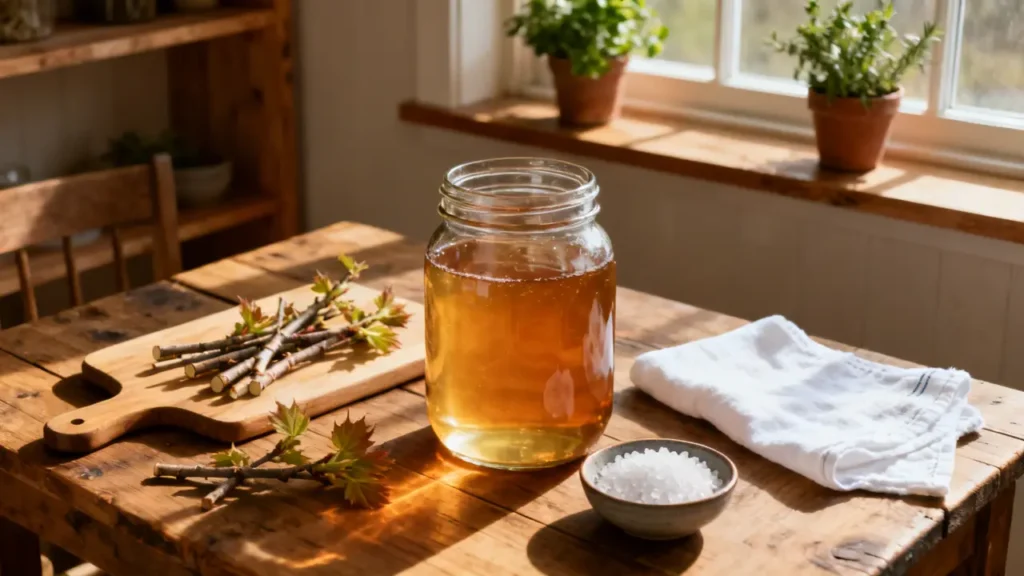

How to store maple sap before boiling
Keep sap cold and clean: strain debris as you collect, use nonreactive food‑grade containers, and chill immediately. We recommend refrigerating at about 33–38°F (0.5–3°C) and boiling within 48 hours; if you can guarantee near‑freezing (32–34°F) and excellent sanitation, you can extend to about 5 days. If you can’t process quickly, freeze at 0°F (‑18°C) with roughly 10% headspace and thaw in the fridge before boiling.
Why this matters: sap is low in sugar (typically ~1.5–3% Brix) and is a great medium for yeasts and bacteria. Those microbes taste bad, reduce syrup yield, and can cause rapid foaming or off‑flavors during the boil. Follow the temperature and container guidance below and you’ll protect both flavor and yield.
Why proper storage matters
Proper storage slows microbial growth and prevents fermentation that sours sap and wastes sugar. Yeasts and bacteria multiply quickly above 40°F (4°C), producing acids and gases that change flavor and lower the sap’s sugar-to-syrup yield.
Temperature and oxygen are the two big levers: cold slows growth and minimizing headspace limits oxygen exposure. That’s why we prioritize quick straining, covered containers, and immediate chilling after collection.
Quick reference — temperatures & maximum hold times
Use these conservative guidelines for safe storage: refrigerate at 33–38°F (0.5–3°C) and plan to boil within 48 hours. If you can reliably keep sap at 32–34°F, many sources allow up to 5 days but that’s conditional on cleanliness.
For field coolers and ice chests treat cover‑and‑ice setups as short term — aim for 24–48 hours. Freezing at 0°F (‑18°C) stops microbial activity and keeps sap months; for best flavor use within 6–12 months.
- Refrigerator — 33–38°F (0.5–3°C): boil within 48 hours (up to 5 days at 32–34°F if spotless).
- Cooler with ice packs — 35–40°F: boil within 24–48 hours.
- Freezer — 0°F (‑18°C): months, best within 6–12 months; leave ~10% headspace.
- Room temperature — spoilage in hours: do not store.
Best containers for storing sap
Choose nonreactive, food‑grade containers such as stainless steel (304 or 316), food‑grade HDPE plastic, or glass for small volumes. These materials won’t impart off‑flavors or react with the sap, and they’re easy to clean and sanitize.
Materials to use
Stainless steel 304/316 and food‑grade HDPE are the workhorses for both backyard and small commercial producers; glass is fine for pints or small lab samples. For backyard collectors we prefer 5‑gallon food‑grade buckets and 1‑gallon freezer bags for frozen batches.
Materials to avoid
Avoid galvanized metal, uncoated iron, copper, or rusty containers — these metals react with sap and can create off‑flavors or safety concerns. Also skip painted or unknown recycled barrels unless they’re certified food‑grade and in excellent condition.
Container size & headspace
For freezing leave about 10% headspace so sap can expand without bursting the container. For refrigeration, minimize headspace to reduce oxygen contact — filling containers nearly full slows spoilage.
Cleaning & sanitizing containers and equipment
Clean with hot water and soap, scrub visible residue, then rinse. For sanitizing we recommend a no‑rinse acid sanitizer like Star San used per label directions; if you use bleach follow the manufacturer’s ratio and rinse when required.
Sanitize before the season and after each use when possible. For tubing and taps follow manufacturer cleaning cycles; a quick daily rinse and a weekly sanitary soak (or more often in warm spells) keeps microbial build‑up down.
Straining & filtering before storage
Strain sap immediately during collection to remove bark, leaves, insects, and big debris that increase microbial load. Removing visible debris reduces the surface area and food for microbes, slowing spoilage.
Recommended filter types
Start with a coarse strainer or paint strainer (roughly 200–400 microns) to catch large bits, then a finer nylon bag if you want clearer sap before chilling. Fine filtration isn’t necessary before storage but will reduce scum during the boil.
When to filter again
Filter again after thawing frozen sap and before you put sap on the evaporator. This catches sediment that settles in freezing and any debris picked up during handling.
Refrigeration — how to do it right (backyard & small‑scale)
Collect, strain, label with date and tree if desired, then chill immediately. Use a dedicated refrigerator or a chest cooler with block ice — close lids often and keep temperatures in the 33–38°F (0.5–3°C) window for the best 48‑hour hold time.
For field collection use a cooler with block ice and ice packs; change the ice daily on multi‑day runs and avoid putting sap in a warm vehicle for transport. If you’re running a small sugarhouse, stack buckets in a walk‑in or dedicated sap fridge instead of leaving them outdoors.
Freezing sap — best practices
Freezing is the reliable long‑term option: freeze at 0°F (‑18°C) or colder and use within 6–12 months for best quality. Leave roughly 10% headspace for expansion, seal well, and label with date and Brix if measured.
Use freezer‑safe rigid containers or heavy‑duty freezer bags; we like freezing flat in one‑gallon bags so they stack and thaw quickly. Thaw in the refrigerator and boil promptly — do not thaw at room temperature and then stash back in the fridge for days.
When thawing, place the sealed bag or container in the fridge 24–48 hours before you plan to boil and strain again before putting sap on the evaporator.
Commercial & large‑scale considerations
Commercial operations use refrigerated bulk tanks and quick transport logistics to keep sap cold until boiling. Maintain and sanitize tanks, pumps, and lines regularly; a single warm load or dirty tank can spoil many gallons quickly.
Agitation reduces settling but increases oxygen exposure — many producers avoid constant agitation to limit microbial growth. Monitor tank temperatures and aim to process within the same windows discussed earlier, or freeze where necessary.
Signs of spoiled or fermenting sap & what to do
Watch for sour or fermented smell, bubbling in stored sap, obvious cloudiness, a slimy film on the surface, or rapid foaming during the early boil. These are signs of microbial activity and mean quality — and yield — will suffer.
Discard strongly fermented sap. For borderline cases (slight cloudiness, faint sourness) you can boil promptly but expect more scum, lower yield, and possible off‑flavors. Test a small batch first rather than risking a full evaporator run.
Small daily workflow & checklist
Make this a short routine: collect → strain → date & label → chill or freeze → sanitize equipment. A consistent workflow prevents mistakes and keeps sap moving through your system before it can spoil.
- Collect sap in covered, strain‑lined buckets or direct‑flow lines.
- Strain through a coarse strainer (200–400 microns) as you collect.
- Label container with date (and tree if helpful).
- Chill immediately in fridge/cooler; if not boiling within 48 hours, freeze with ~10% headspace.
- Sanitize containers/taps after emptying and before next use.
Pro tip: we write the date on a strip of tape and stick it to every bucket. I learned the hard way when I boiled a forgotten bucket of warm, sour sap — now labeling is nonnegotiable for our setup.
Troubleshooting common problems
Foam or rapid scum during the boil usually signals microbial contamination or lots of debris; skim aggressively, filter, and be prepared for lower yield. Avoid chemical defoamers — they’re unnecessary with cleaner sap and good filtering.
Frozen sap with sediment: thaw in fridge and filter before boiling. If off‑flavors persist after boiling, it’s most likely decayed sap or reactive metals used earlier in collection — double‑check your equipment materials.
Quick reference summary & decision flow
Short decision: can you boil within 48 hours? If yes, refrigerate at 33–38°F (0.5–3°C). If no, freeze at 0°F (‑18°C) with about 10% headspace. Discard sap with strong sour smell, bubbling, or heavy cloudiness.
Need a how‑to on turning sap into syrup? See our step‑by‑step guide on how to boil maple sap into syrup and the deeper explanation of finishing at how to boil down maple syrup.


