
What is Vasilopita?
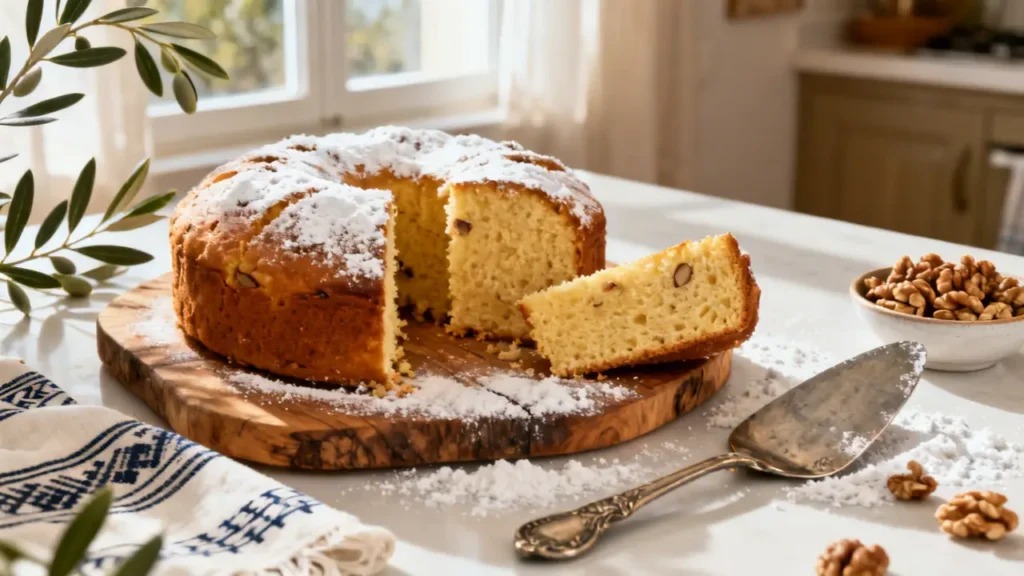
Vasilopita is a special Greek cake baked for New Year’s to honor Saint Basil; it’s both a dessert and a family ritual where a wrapped coin is hidden inside for good luck. Families bake or buy a vasilopita and slice it at midnight or the first meal of the year, with the coin symbolizing blessings for the finder. The cake’s texture ranges from light, citrus-scented loaf to denser semolina versions depending on region and recipe.
The story and the custom go back centuries in Greece and among Greek communities worldwide — it’s less about strict authenticity and more about who’s at the table. Regional differences matter: some households prefer an orange-butter loaf while others make semolina cakes that feel almost like a firm pudding. We’ll cover the origin, how families cut the cake, and practical tips so your vasilopita comes out reliably every year.
The story of St. Basil and the cake
The popular origin story says Saint Basil (4th century) divided his wealth among the poor, and when a coin was lost and later found inside a cake, the tradition began. That story links generosity with good fortune and explains why a coin or token is hidden in the cake today. Over time the legend became a family ritual—everyone hopes the coin brings luck for the coming year.
How families celebrate with vasilopita
Cutting vasilopita is a ritual with an order: typically the first slice goes to Christ or the house (depending on household), then to the head of the household, visiting family, and finally the children. The finder of the coin is said to receive good luck for the year, but many families see it more as a blessing than a literal fortune. We’ll include an exact cutting order you can follow, and alternatives if you prefer a safer token method.
Classic Vasilopita Recipe (9-inch round) — Quick Facts
This classic 9-inch vasilopita (vasilopita greek new years cake) yields about 10–12 servings and bakes at 350°F (175–180°C)45–60 minutes. Prep time is roughly 20 minutes, difficulty is easy-to-moderate, and we tested this version with butter for flavor and with oil as a swap for moister crumb. Use a standard 9″ (23 cm) round pan for the depth and bake times listed below.
We prefer the orange-butter version for balance of flavor and texture, but include semolina, vegan, and gluten-free swaps later. Keep a thermometer on hand: if in doubt, aim for an internal temp of 200–205°F (93–96°C) for a fully set crumb.
- Yield: 10–12 servings (9″ round)
- Oven: 350°F (175–180°C) conventional; reduce 15–20°F for convection
- Bake time: 45–60 minutes (check from 40 minutes)
Ingredients (tested) — Imperial + Metric: 1 3/4 cups (220 g) all-purpose flour; 1 cup (200 g) granulated sugar; 3 large eggs; 1/2 cup (115 g) unsalted butter, softened (or 1/2 cup / 110 g neutral oil); 1/2 cup (120 ml) milk or fresh orange juice; zest of 1 orange; 1–2 tbsp brandy or orange liqueur (optional); 2 tsp baking powder; pinch of salt; powdered sugar for dusting.
Equipment: 9″ (23 cm) round cake pan, hand or stand mixer (or whisk), rubber spatula, oven thermometer, and an instant-read thermometer for doneness. If you want to follow along with a similar Greek recipe, see our related page on vasilopita — Greek New Year’s cake for more context and photos.
Step-by-step Directions
Start by prepping the coin and pan, then make the batter using a simple creaming (butter) method or oil method for a moister cake. Preheat the oven to 350°F (175–180°C) and have your wrapped coin ready; we explain safe placement options below. Follow the mixing, baking, and finishing steps closely to avoid common problems like a dense center or cracked top.
Prep (coin safety, greasing, preheating)
Never drop a loose coin into the batter; instead, sterilize and double-wrap it in foil, then slip it into a small parchment sachet or wrap it in several layers so it won’t touch the cake directly. If you prefer, bake the cake fully and insert the wrapped coin under the center after cooling—this avoids any sanitation worry. Grease and line your 9″ pan, and preheat to 350°F (175–180°C) so the cake begins rising immediately when it goes in.
Coin safety quick tips: sterilize coin/token, wrap in foil and parchment, or use a food-safe token or almond in a sachet. If you’re serving kids or want zero-risk, place a special token on top of the cake after baking.
Make the batter (creaming vs oil)
For the butter method: cream 1/2 cup (115 g) butter with 1 cup (200 g) sugar until pale and fluffy, add eggs one at a time, then fold in orange zest, brandy, and milk/orange juice. Sift together 1 3/4 cups (220 g) flour, 2 tsp baking powder, and a pinch of salt; fold into wet mixture just until combined—do not overmix. For the oil method, whisk oil with sugar, then add eggs, zest, and liquids, finishing with dry ingredients; this is slightly easier and yields a moister crumb.
Folding gently preserves air from the creaming step and prevents a dense cake. Sarah learned the hard way that overworking the batter made our first test cake heavy; once we slowed down and folded by hand the texture improved significantly.
Bake & test for doneness
Pour batter into the prepared pan, smooth the top, and place in the center of the oven. Bake at 350°F (175–180°C) for 45–60 minutes—check at 40–45 minutes, and every 5–10 minutes after if needed. The toothpick should come out with a few moist crumbs (not wet batter), or the center should read about 200–205°F (93–96°C) with an instant-read thermometer.
If the top browns too fast, tent with foil after 25–30 minutes; if the center is browning but still under, lower the temp by 10–15°F and extend bake time. For shallower pans like a 10″ round, expect 5–10 minutes less; denser semolina versions can take up to 70 minutes.
Finish & decorate
Cool the cake in the pan for 10–15 minutes, then remove to a rack to cool completely before dusting with powdered sugar or brush with a thin orange glaze. Traditional look: a white sugar-dusted top with a simple cross or the year spelled in powdered sugar. Add candied orange slices or a thin glaze if you like—don’t overload the cake or you’ll hide the ritual slice.
Variations — Regional & Dietary
Vasilopita adapts well: orange-butter for bright citrus flavor, semolina for classic Greek texture, oil-based vegan versions, and gluten-free blends for dietary needs. Each swap changes texture: semolina yields a firmer, almost pudding-like crumb, while oil makes a moister loaf. We tested each variant and give exact swaps below so you know what to expect.
Orange vasilopita
Swap milk for 1/2 cup (120 ml) fresh orange juice and add the zest of 2 oranges; reduce added sugar by 1–2 tbsp if your oranges are sweet. Optionally stir in 1 tbsp orange liqueur or brandy for depth. Expect a slightly softer crumb and bake time similar to the classic version.
Semolina vasilopita
Use 1 1/2 cups (240 g) fine semolina and reduce flour proportion; increase liquid slightly (add 2–4 tbsp) and give the batter time to rest 15 minutes to hydrate the semolina. This produces a denser, traditional texture and may add 10–20 minutes to bake time—check with a thermometer and plan for up to 70 minutes.
Vegan & gluten-free options
For vegan: swap butter for equal weight neutral oil, eggs for 3 tbsp aquafaba or 3 flax eggs, and use plant milk. For gluten-free: use a 1:1 cup-for-cup blend designed for cakes; add 1/4 tsp xanthan gum if the blend lacks it. Expect slight crumb differences—gluten-free versions are best eaten within 2–3 days.
Troubleshooting — Common Problems & Fixes
If your vasilopita has a dense or undercooked center, common causes are underbaking, too much liquid, or overmixing. The fix: tent with foil, bake longer, and use an instant-read thermometer to reach 200–205°F (93–96°C). For a cracked top, lower the oven temperature slightly and avoid overwhipping the batter.
Sinking after cooling often means the cake cooled too quickly or the center was slightly underbaked—allow a gradual cool and check doneness before removing from the oven. If the coin is lost or you worry about safety, use a wrapped token, or place the wrapped coin under the center after cooling.
Pan conversion note: a 10″ round will be shallower—reduce bake time by about 5–10 minutes. Bundt pans may need similar adjustments but expect longer times for dense batters; always test with the thermometer.
Make-Ahead, Storage & Serving
Vasilopita keeps well at room temperature wrapped in plastic or beeswax for 2–3 days, or in the fridge for up to a week. To freeze, wrap tightly in plastic and foil; it will keep 2–3 months—thaw overnight in the fridge and bring to room temp before serving. Reheat slices briefly in a 325°F (160°C) oven for 8–10 minutes if you prefer warm servings.
If you need tips on freezing other cakes, check our guide on how to freeze cakes for general strategies (link to storage guide).
Cutting the Vasilopita — Order & Ritual
Cut the vasilopita with intention: the first slice is for Christ/the saints or the household, then to the head of household, elders, absent family, and finally the children and guests. Assign slices in order of importance or relationship—this is flexible and varies by family. Announce each dedication as you cut for the ritual’s full meaning.
We recommend placing the wrapped coin near the center so pieces are approximately equal; if you fear losing the coin, present a token instead or place the coin under the cake after baking and before serving.
Printable Recipe Card
Below is the tested classic orange-butter vasilopita recipe with metric weights and full directions—perfect to print or paste into a recipe card. Yield: 10–12 servings in a 9″ round.
Ingredients:
- 1 3/4 cups (220 g) all-purpose flour
- 1 cup (200 g) granulated sugar
- 3 large eggs
- 1/2 cup (115 g) unsalted butter, softened (or 1/2 cup / 110 g neutral oil)
- 1/2 cup (120 ml) milk or fresh orange juice
- Zest of 1 large orange
- 1–2 tbsp brandy or orange liqueur (optional)
- 2 tsp baking powder
- Pinch of salt
- Powdered sugar for dusting
Equipment: 9″ round pan, mixer/whisk, spatula, instant-read thermometer.
- Preheat oven to 350°F (175–180°C). Grease and line a 9″ round pan. Sterilize and wrap coin/token, or plan to insert after baking.
- Cream butter and sugar until pale; add eggs one at a time. Stir in orange zest, brandy, and milk/orange juice. (Oil method: whisk oil + sugar, then add eggs and liquids.)
- Sift flour, baking powder, and salt; fold into wet ingredients gently until just combined. Do not overmix.
- Pour in pan, smooth top, and bake 45–60 minutes. Start checking at 40–45 minutes; center should read 200–205°F (93–96°C) or toothpick with moist crumbs.
- Cool 10–15 minutes in pan, remove to rack to finish cooling. Insert wrapped coin (if not already inside) and dust with powdered sugar or glaze. Slice according to tradition and serve.
Nutritional estimate (per slice, 12 slices): approx. 300–360 kcal depending on butter/oil and extras. Adjust for added glaze or candied fruit.
Related Recipes & Further Reading
Want variations or context? Try our citrus-forward recipes for inspiration, or learn more about Greek holiday cooking and semolina desserts. For a savory complement to holiday sweets, see our Greek-style chicken fricassee (avgolemono) and for a light side try roasted cauliflower Greek salad. These internal pages are handy when planning a full Greek holiday table.