
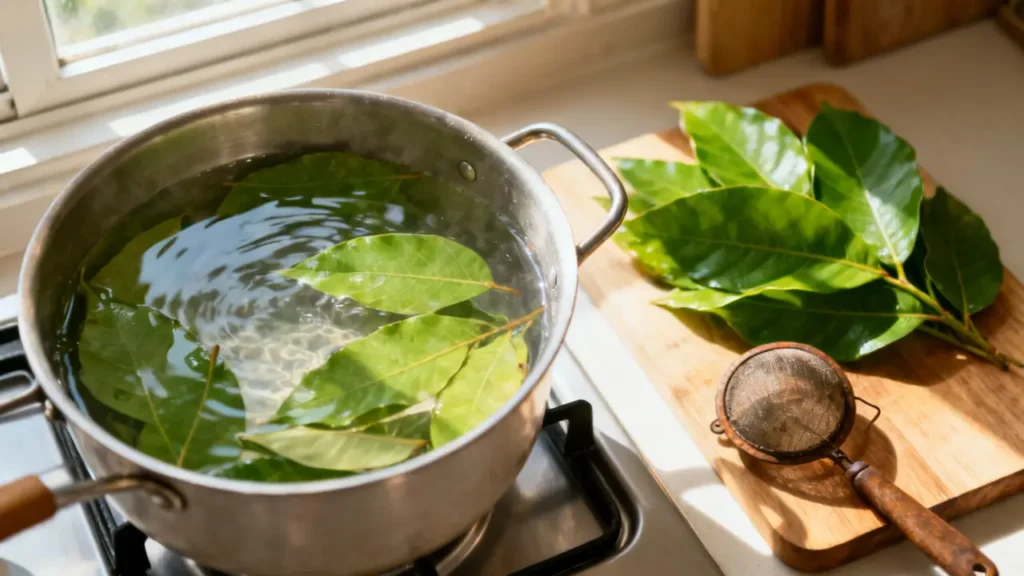

How to boil soursop leaves the safe, reproducible way: this guide gives exact leaf-to-water ratios, boil and steep times, fresh vs dried conversions, storage tips, and conservative dosing so you can make a mild cup or a stronger decoction without guessing. We keep it practical for home kitchens.
How to boil soursop leaves: quick method
This quick method shows the simplest, safest way to boil soursop leaves for tea: wash leaves, use the recommended leaf-to-water ratio, bring water to a boil, simmer, steep, strain, and serve. For an everyday mild cup use 2 fresh medium leaves per 250 ml (1 cup) or 1 teaspoon dried (≈1–2 g) per cup. For a regular decoction scale to 4–6 fresh leaves per 500–750 ml and simmer longer as shown below. Limit intake to a conservative 1–2 cups per day of light-to-regular tea and avoid long-term heavy use without medical supervision.
Ingredients and yield
- Fresh soursop leaves: 2 leaves per 250 ml (1 cup) for light infusion; 4–6 leaves per 500–750 ml for regular decoction.
- Dried soursop leaves: 1 teaspoon (≈1–2 g) per 250 ml (1 cup).
- Water: filtered if possible.
- Optional: honey, lemon, ginger (see serving ideas).
Quick step-by-step
- Rinse leaves under cool running water and pick off any damaged bits.
- Bring the water to a rolling boil (about 100°C / 212°F).
- Add leaves, reduce to a simmer (~85–95°C / 185–203°F) and simmer the recommended time below.
- Turn off heat and let the tea steep for the stated time, then strain into a teapot or jug.
- Start with one cup and wait a few hours before increasing frequency; do not exceed the conservative limits described later.
Why the steps matter
The sequence—wash, boil, simmer, steep, strain—controls extraction of flavor and bioactive compounds. Boiling at 100°C extracts more compounds quickly, while simmering (85–95°C) gently pulls flavor without excessive agitation that can make tea bitter. Steeping after heat is off lets soluble aromatics disperse without further degrading delicate compounds.
Longer boils increase concentration of everything in the brew, including bitter or less-studied compounds such as annonacin, so we recommend conservative extraction times for regular use. If you want a stronger, short-term decoction follow the concentrated-method warning and consult a clinician if you plan to use it medicinally.
For more general herbal-brewing basics see our guide on how to make herbal tea, and for digestion-friendly blends check the piece on best herbal teas for digestion which pairs well with soursop leaf tea.
Exact recipes and variations
Below are three reproducible methods: light infusion for daily sipping, a regular decoction for fuller flavor, and a concentrated decoction for short-term, clinician-guided use. Each recipe lists leaf-to-water ratios, temperatures, times, and intended frequency.
Light infusion — everyday mild tea
Use this when you want a gentle cup that’s less likely to cause side effects: 2 fresh medium leaves per 250 ml (1 cup) or 1 teaspoon dried (≈1–2 g). Bring water to a boil, add leaves, simmer 3–5 minutes, then remove from heat and steep 5 minutes before straining. Drink up to 1–2 cups per day and adjust by taste.
Regular decoction — traditional stronger tea
This is the traditional method many households use for fuller flavor: 4–6 fresh leaves per 500–750 ml. Bring to a boil, reduce to a simmer and cook for 10–15 minutes, then turn off heat and steep 10 minutes before straining. Limit to 1 cup up to 1–2 times per day and watch for any stomach upset.
Concentrated decoction — short-term use only
For concentrated preparations used short-term under guidance, use up to 6–10 fresh leaves per 500 ml and simmer 15–20 minutes. This yields a potent brew; do not use this daily long-term. We include this for reproducibility only, with a strong safety warning below.
Dried-leaf substitution and equivalents
Because leaf size varies, count-based measures are imprecise. Best practice is weight: 1 teaspoon dried ≈ 1–2 g, which generally equals about 1–2 small fresh leaves. If you only have leaves by count, use the fresh counts above as a starting point and adjust by weight when possible.
If you plan to brew regularly, weigh your dried leaves with a small kitchen scale and record the grams per cup for consistent strength.
How to prepare fresh vs dried leaves and check quality
Fresh leaves need a gentle rinse and inspection; dried leaves require proper drying and airtight storage. Always discard leaves with mold, dark soggy spots, or unusual smells. If pesticides are a concern, soak leaves in cool water for 10 minutes, then rinse again under running water.
Washing and inspecting leaves
Rinse fresh leaves under cool running water and rub gently with your fingers to remove dust. Remove any holes, brown edges, or sticky residue and discard affected leaves. If you suspect heavy pesticide use, peel outer damaged leaves off the plant and only use healthy inner leaves.
Drying leaves at home and storage
To dry at home, lay clean leaves on a tray in a single layer in a warm, well-ventilated place out of direct sun for 5–10 days, or oven-dry at 50–60°C / 120–140°F for 2–4 hours until brittle. Store dried leaves in an airtight container in a cool, dark place for 6–12 months. For more on drying methods see our herb guide anchored at how to dry herb leaves at home.
I learned the hard way that eyeballing leaf counts gave tea that was unpredictably bitter; now I weigh batches and label jars. That small step made daily brewing consistent and kept the flavor pleasant for the whole family.
How to control flavor and strength — troubleshooting
If your tea is too bitter, it usually means too many leaves, too high a simmer, or too long a boil. Reduce leaves by 20–30%, shorten simmer time, or use the light infusion method. Conversely, if it’s too weak, add 1–2 leaves or simmer an extra 3–5 minutes.
Other fixes: add a squeeze of lemon to brighten flavor, a small spoon of honey to smooth bitterness, or blend with ginger for a spicier profile. Cold-brewing overnight in the fridge with fewer leaves gives a milder, less bitter cup.
If you feel nausea, dizziness, or shaking after drinking, stop immediately, dilute any remaining brew, and consult a healthcare professional about continuing use.
Safety, dosing, and interactions: must-read
Soursop leaves are traditionally used for tea, but clinical data in humans is limited and animal studies suggest caution. There is concern about annonacin, a compound found in some Annona species, which in high or chronic doses has been linked to neurological effects in observational and animal studies, so we recommend conservative intake limits and short-term use for concentrated brews.
Who should avoid soursop leaf tea
Avoid during pregnancy and breastfeeding, in young children, and in people with Parkinson’s disease or other neurological conditions. If you take blood sugar or blood pressure medications, speak with your clinician before drinking soursop leaf tea because it may affect those measures.
Potential interactions and side effects
Soursop leaf tea can potentially lower blood sugar or blood pressure; this could interact with antidiabetic or antihypertensive drugs. Reported side effects at higher exposure include nausea and neurological symptoms in observational studies; the evidence base is limited and not definitive. Do not rely on soursop tea as a treatment for any disease.
Recommended conservative intake limits
For regular, everyday use stick to the light infusion: up to 1–2 cups per day. For regular decoction limit to 1 cup, 1–2 times per day. Avoid daily consumption of concentrated decoctions; if you need stronger use, do so only short-term and under medical guidance. If using daily for more than two weeks, check in with your healthcare provider.
Storage and reheating — how long brewed tea lasts
Cool brewed tea quickly and store in a sealed container in the fridge. Refrigerate for up to 48–72 hours, ideally consume within 24–48 hours for best flavor. For longer storage freeze in ice-cube trays or sealed containers for up to 3 months.
When reheating, warm gently to 60–70°C / 140–158°F; avoid repeated boil-and-reheat cycles which concentrate flavors and may increase bitterness. Thaw frozen portions in the fridge overnight for best results.
Recipes and serving ideas
Simple variations help the tea taste great: add lemon and honey, serve iced, or combine with ginger for digestion. Below are quick, reproducible serving ideas that use the tea you just made.
Sweetened lemon variation
To one cup (250 ml) of regular infusion add 1 teaspoon honey and the juice of 1/4 lemon, stir and taste. Serve warm or over ice. Lemon brightens flavor and honey smooths bitterness.
Iced soursop leaf tea
Brew a double batch using the regular decoction ratios, cool to room temperature, strain, refrigerate, and serve over ice with slices of lemon and a sprig of mint. Use 4–6 fresh leaves per 500–750 ml for a balanced iced tea.
Soursop leaf + ginger for digestion
Add a 1-inch (2.5 cm) slice of fresh ginger while simmering for the last 5–7 minutes to combine the warming benefits and improve taste. Simmering together for 8–12 minutes yields a pleasant, stomach-friendly brew.
Sources, evidence and further reading
Traditional use of soursop leaves for tea is widespread, but robust human clinical trials are limited. Much of the safety conversation comes from animal studies and observational reports; for balanced reading consult peer-reviewed articles and national health advisories. We do not claim cures—only that this is a practical brewing guide with conservative safety limits.
For broader herbal safety and interactions see our overview on natural remedies: safety and interactions and for drying/storage techniques visit our herb-drying resources linked above.


