

how long to boil stone crab
The short, practical answer is: boil stone crab claws 4–6 minutes for fresh claws and 6–8 minutes for claws that were frozen and thawed, counting from the moment the water returns to a vigorous boil. This timing gives you warm, tender meat without drying it out. Use a large pot so the water temperature recovers quickly when you add the claws.
Why those numbers? Stone crab claws are mostly dense muscle and already cooked at harvest by the seafood house when sold as separated claws, so you’re warming and finishing them rather than cooking raw meat from scratch. Overcooking makes the meat tough and stringy, while underheating leaves them less enjoyable and cooler than you want.
what you need and why it matters
Use a big stockpot that holds at least 4–6 quarts for a dozen claws and fill it with enough water to cover the claws by an inch or two. Salt the water generously (about 2 tablespoons per gallon) — this seasons the claw meat as it heats and keeps the flavor bright. Add a bay leaf, a smashed garlic clove, or a lemon quarter for subtle aromatics if you like.
We prefer starting with boiling water (not simmering) so the temperature dip when you add claws is short. If the pot is too small the water temperature drops and you end up simmering, which lengthens heating time and can create uneven texture. A rolling boil is the target before and after you add claws.
step-by-step: boiling stone crab claws
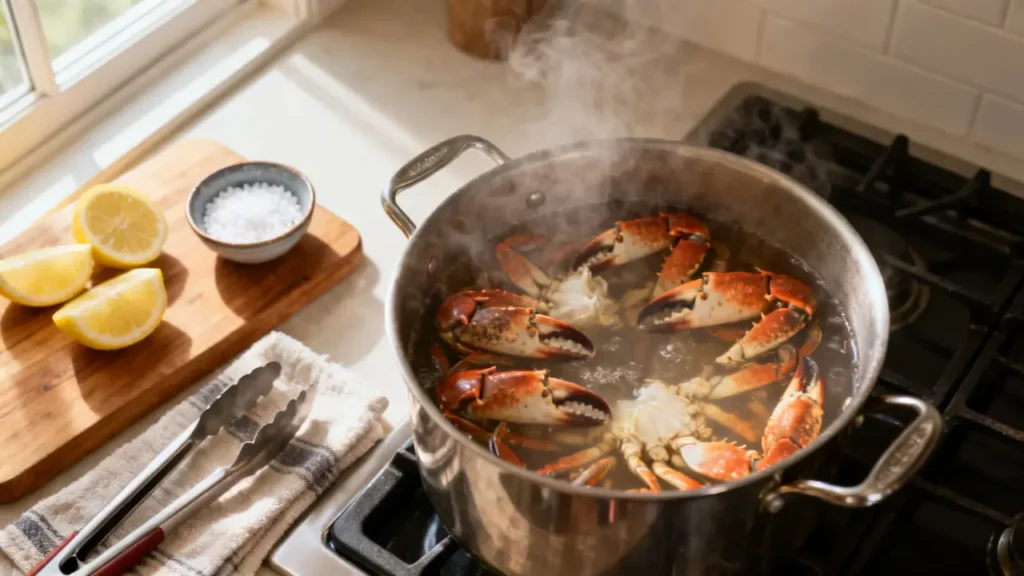
Bring a large pot of water to a full, rolling boil and season it with roughly 2 tablespoons salt per gallon. Add the claws (don’t crowd them), wait for the water to come back to a vigorous boil, then start your timer: 4–6 minutes for fresh, 6–8 minutes for thawed frozen. Remove and plunge into an ice bath for a minute if you want to stop carryover cooking, or serve immediately while hot.
Use tongs or a slotted spoon to add and remove claws so you don’t burn yourself. Visual cues: shells will brighten in color and the meat inside (when seen through a cracked shell) will appear opaque and firm. If you’re serving with clarified butter or mustard sauce, have those warmed and ready—stone crab is best eaten immediately when hot.
- Bring water to a vigorous boil and salt it.
- Add claws in a single layer; wait for boil to return.
- Timer: 4–6 minutes fresh, 6–8 minutes thawed frozen.
- Remove and serve hot or chill briefly to stop cooking.
fresh vs frozen: timing and texture
If your claws are sold fresh (never frozen), use the lower end of the timing: 4–6 minutes total. If they were frozen and you thawed them, err toward 6–8 minutes because freezing changes muscle fibers and they take a bit longer to heat through evenly. Either way, avoid long, slow simmering.
Sarah learned the hard way trying to stretch times to please a crowd: we kept claws in a barely simmering pot and ended up with dry meat. Since then we always verify a vigorous boil and use the timer. If you have mixed sizes, remove the smallest claws after 4 minutes and let the big ones go to 6–8 minutes.
seasoning, sauces, and serving ideas
Stone crab claws are salty and sweet on their own, so simple sauces showcase them best. Classic pairings are warmed drawn butter, a mustard vinaigrette, or a mayo-based remoulade. Keep sauces warm and ready so you don’t lose temperature while diners crack shells.
For a quick sauce, whisk together 3 tablespoons melted butter with 1 teaspoon lemon zest, a pinch of cayenne, and a squeeze of lemon juice. If you want a tested deep-dive on other shellfish techniques like crab legs or clusters, check our guide on how to boil crab claws, which covers timing adjustments and sauce pairings.
reheating and leftovers
You can serve stone crab hot or cold, but reheating requires care to avoid rubbery meat. To reheat gently, steam or poach for 2–3 minutes in simmering water (not a boil) until warmed through; avoid microwaving on high which dries the meat. For leftover seafood boils with other ingredients, warm the whole bag or pot gently — see our post on how to reheat a seafood boil for step-by-step reheating options.
If you plan to serve cold (classic in some restaurants), chill claws quickly in an ice bath for 5–10 minutes after boiling, then refrigerate and serve within 24 hours. Store leftovers in an airtight container and use within 2 days for best texture and safety.
common mistakes and pro tips
The most common mistake is letting the water drop to a simmer when you add claws — that stretches heating time and makes texture uneven. Another is over-salting the pot: 2 tablespoons per gallon seasons the meat well; you rarely need more. Finally, don’t assume frozen claws need the same time as fresh — give them an extra 1–2 minutes.
Pro tip: keep a candy or instant-read thermometer handy; after heating, the meat near the thickest part should read about 135–140°F (57–60°C) when hot-served — enough to be warm but not overcooked. If you like to pre-crack shells for easy eating, do that just before serving so juices don’t run out and dry the meat.
quick troubleshooting
If claws feel rubbery: you likely overcooked them—serve sliced and dressed or use in salad to disguise texture. If the meat is cold in the center: your water wasn’t hot enough or you overcrowded the pot; reheat briefly in simmering water for 2–3 minutes. If shells look dull instead of bright, a longer reboil won’t help; focus on warming gently next time.
Small visual checklist: brightened shell color, opaque meat, and firm but yielding texture are the signs of done. When in doubt, shorter time and an ice bath to halt carryover cooking gives you the safest bet for tender claws.


