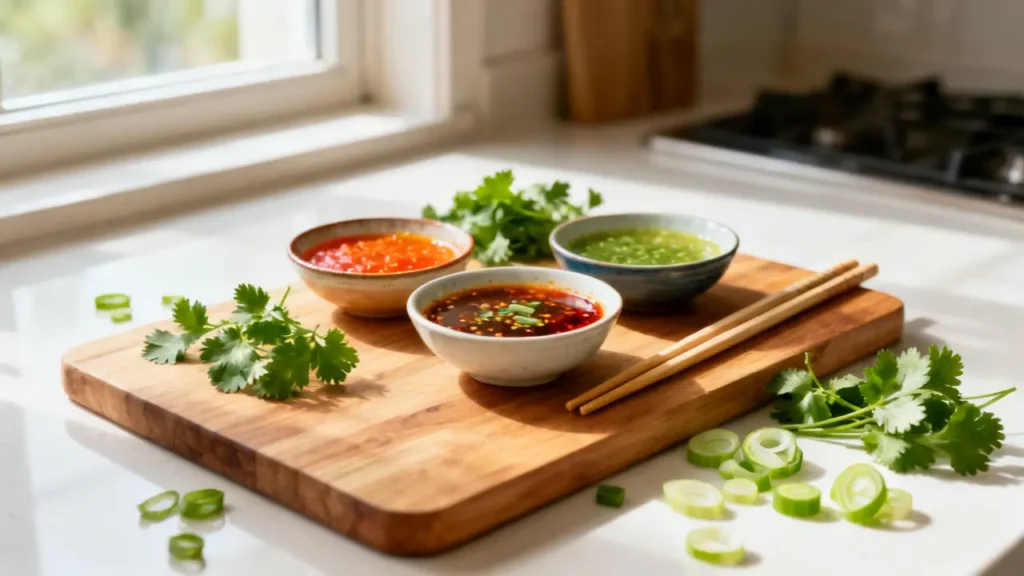

Easy dipping sauces for dumplings and wontons are quick to mix and instantly upgrade any batch, whether steamed or fried. This guide gives 12 simple sauces, clear ratios, pairing notes for pork, shrimp, and veggie dumplings, plus storage tips and quick fixes. Fast, pantry-friendly, and family-tested.
How to think about dumpling dipping sauces
Dumpling dips should balance salt, sour, sweet, and heat to lift the filling and add contrast. A fatty pork filling wants more acid and heat, a delicate shrimp or chicken filling benefits from citrus and light soy, and vegetable dumplings do well with umami and bright vinegar.
We keep things simple: start with a tested ratio, taste, and then adjust in small increments. That way a sauce becomes a partner to the dumpling rather than overpowering it.
Basic ratio formulas to build your own sauce
Yes, you can improvise. The easiest starting point is a 1:1 soy to vinegar base for most classic dips, a 2:1 nut butter to liquid template for creamy sauces, and a simple oil-to-chili ratio for heat. These ratios give you a predictable flavor skeleton.
Soy-vinegar base
Use 1 part light soy sauce to 1 part rice or black vinegar, then add a splash of sesame oil, minced ginger, and chopped scallion. Shift to 2:1 soy:vinegar for salt-forward dips or 1:2 for a tangy lift.
Sesame and peanut bases
For creamy dips, start with 2 parts nut butter to 1 part liquid and thin with warm water or broth until spoonable. Add acid to brighten and sugar to temper bitterness from natural nut butter.
Chili oil and heat base
For chili oil dips, use 1-2 tablespoons chili oil to 1 tablespoon soy sauce as a quick mix, or make your own by heating neutral oil to 275-300°F (135-150°C) and pouring it over 2-3 tablespoons chili flakes and aromatics to bloom flavor safely.
12 easy dipping sauces
Below are quick recipes, with prep times, pairings, and one tweak to make each sauce your own.
Classic soy and black vinegar with ginger
Prep: 2 minutes. Serves: 4. Mix 2 tbsp (30 ml) light soy sauce with 2 tbsp (30 ml) Chinkiang black vinegar, stir in 1 tsp (5 ml) toasted sesame oil, 1 tsp (5 g) minced fresh ginger, and 1 tsp chopped scallion. Ideal for pork dumplings. Tweak: use more vinegar for a brighter bite.
Soy, rice vinegar, scallion and sesame
Prep: 2 minutes. Serves: 4. Combine 2 tbsp (30 ml) light soy, 2 tbsp (30 ml) rice vinegar, 1 tsp (5 ml) toasted sesame oil, a pinch sugar, and thinly sliced scallions. Great for steamed dumplings. Tweak: add a splash of citrus for shrimp.
Black vinegar and fresh ginger
Prep: 1 minute. Serves: 4. Use 2 tbsp (30 ml) black vinegar with 1 tsp (5 g) grated ginger and a pinch sugar. This is the classic pairing for rich pork dumplings.
Spicy chili oil dip
Prep: 1 minute using store-bought chili oil. Serves: 4. Mix 1-2 tbsp (15-30 ml) chili oil, 1 tbsp (15 ml) soy, and 1 tsp (5 ml) rice vinegar. Pair with fried or crispy potstickers. Tip: add a teaspoon of chili crisp for texture.
Sweet chili shortcut
Prep: 1 minute. Serves: 4. Use bottled sweet chili sauce, thin with a little rice vinegar and lime for brightness. Works well with spring rolls and wontons.
Creamy peanut sauce
Prep: 3 minutes. Serves: 4. Whisk 2 tbsp (30 g) peanut butter with 1 tbsp (15 ml) soy, 1 tbsp (15 ml) rice vinegar or lime juice, and 1-2 tbsp (15-30 ml) warm water to thin. Add a dash of honey if you want sweet. Pair with vegetable dumplings.
Hoisin-sesame dipping sauce
Prep: 2 minutes. Serves: 4. Stir 2 tbsp (30 ml) hoisin with 1 tsp (5 ml) sesame oil, 1 tsp rice vinegar, and water to loosen. A sweet-savory option for fried dumplings.
Ponzu-style citrus soy
Prep: 2 minutes. Serves: 4. Mix 2 tbsp (30 ml) soy, 1 tbsp (15 ml) fresh citrus (lime, lemon, or yuzu), and 1 tsp (5 ml) mirin or rice vinegar. Light and bright, great for shrimp dumplings.
Gochujang soy dip
Prep: 2 minutes. Serves: 4. Whisk 1 tbsp (15 g) gochujang with 1 tbsp (15 ml) soy, 1 tsp rice vinegar, and 1 tbsp warm water. Spicy, sweet and umami-forward for pork or fried dumplings.
Garlic-scallion soy
Prep: 2 minutes. Serves: 4. Mince one garlic clove and mix with 3 tbsp (45 ml) soy, 1 tsp sesame oil, and chopped scallion. A minimalist yet flavorful dip.
Miso-sesame dip
Prep: 3 minutes. Serves: 4. Whisk 1 tbsp (15 g) white miso with 1 tbsp rice vinegar, 1 tsp sesame oil, and 1-2 tbsp water to thin. Umami-rich and vegetarian-friendly.
Low-sodium vegan option
Prep: 2 minutes. Serves: 4. Use low-sodium tamari 2 tbsp, 2 tbsp rice vinegar, 1 tsp toasted sesame oil, and chopped scallion. Keeps salt down without losing flavor.
How to match sauce to dumpling type
Match the sauce by contrast: fatty pork wants acid and heat, delicate shrimp favors citrus or ponzu, fried dumplings tolerate sweeter or oil-forward sauces, and veggie dumplings benefit from nutty or miso-based dips. For broth-wontons, use a lighter soy-citrus dip.
If you need a recipe for cooking your dumplings first, check our guides on how to boil wontons, how to boil potstickers, or how to make boiled dumplings for serving suggestions.
Make-ahead, storage and troubleshooting
Short answer on storage: vinegar-based sauces keep 7-14 days refrigerated, peanut-based dips 4-5 days, and pure oil-based chili oil lasts 2-3 weeks in the fridge or longer if kept clean and sealed. Always use clean utensils to avoid cross-contamination.
Common fixes: too salty? Add acid, a little sugar, or dilute with water. Too sour? Add a pinch of sugar or some sesame oil. Too spicy? Stir in nut butter or sugar to mellow heat. If a sauce separates, whisk vigorously or add a tiny spoonful of peanut butter or mustard as an emulsifier.
Ingredient substitutions and pantry staples
Rice vinegar can replace black vinegar for milder tang; if you only have white vinegar, cut it with water and add a pinch sugar. Tamari is the best soy swap for gluten-free needs, and bottled sweet chili or hoisin are usable shortcuts for sweet-savory sauces.
We also link a quick method for frozen wontons to help when you are short on time, see how to boil frozen wontons for timing and serving tips.
Serving and presentation tips
Serve sauces at room temperature or slightly warm for oil-forward dips. Garnish with chopped scallions, toasted sesame seeds, or a thin slice of ginger for color and aroma. For a party, put sauces in small ramekins and label pairings so guests can mix and match.
Personal note: I used to splash soy blindly and end up with a salt-heavy dip, so now I always start with the 1:1 soy to vinegar rule and taste. That small habit saved many bowls from being tossed and made our dumpling nights much happier.

easy dipping sauces for dumplings and wontons
4
servings5
minutes25
kcal5
minutesA fast, classic soy and black vinegar dipping sauce with fresh ginger, great for pork dumplings and potstickers.
Ingredients
2 tbsp light soy sauce (30 ml)
2 tbsp Chinkiang black vinegar or rice vinegar (30 ml)
1 tsp toasted sesame oil (5 ml)
1 tsp minced fresh ginger (about 5 g)
1 tsp chopped scallion
1/2 tsp sugar optional (2.5 g)
Directions
- Combine soy sauce and black vinegar in a small bowl and stir to blend the liquids.
- Add the sesame oil, minced ginger, and chopped scallion, then taste and adjust with up to 1/2 tsp sugar or a splash more vinegar to balance.
- Serve at room temperature with steamed or fried dumplings and store leftovers in an airtight jar in the fridge for up to 7 days.
Notes
- Start with a 1:1 soy to vinegar ratio and adjust to taste.
Use fresh ginger for brightness and toasted sesame oil for aroma.
Keep sauces in glass jars and use clean spoons to avoid contamination.
What are the key ingredients for a basic dumpling dipping sauce?
The basic building blocks are soy sauce for salt and umami, vinegar for acid, a little sesame oil for aroma, and aromatics like ginger or scallion for freshness. Start 1:1 soy to vinegar and adjust to the filling.
How do you balance salty, sweet, spicy, and tangy flavors in dumpling sauces?
Begin with a base ratio such as 1:1 soy to vinegar, taste, and tweak: add sugar or honey for sweetness, more vinegar for tang, chili oil for heat, and a splash of water or unsalted broth to dilute if it is too strong. Small changes go a long way.
What are some easy no-cook dipping sauces for wontons?
No-cook options include the classic soy and rice vinegar mix, a ponzu-style citrus soy, bottled sweet chili thinned with lime, or a simple garlic-scallion soy. Each takes 1-3 minutes to assemble and pairs well with boiled or steamed wontons.
Can you make quick dumpling sauces with pantry staples like soy sauce and vinegar?
Yes, most great dips are pantry-friendly: combine soy, rice or black vinegar, sesame oil and an aromatic and you have a tasty dipping sauce. Keep 1:1 as your baseline and add sugar, chili oil, or citrus to personalize.
What’s the best sauce for soup dumplings or steamed wontons?
Lighter sauces work best: a ponzu-style citrus soy or diluted soy with a touch of sesame oil and minced scallion will complement soup dumplings without overpowering the broth. Avoid heavy nutty or overly sweet sauces for soup dumplings.
Are there spicy or vinegar-based variations for different dumpling types?
Absolutely. Fried dumplings can handle richer, sweeter or oil-forward chili dips, while vinegar-forward sauces pair naturally with fatty pork dumplings. For shrimp and delicate fillings use citrus or lighter soy blends. Adjust heat with chili oil or gochujang as desired.